develop

The Videos of Sadie Benning (1989-1998) – remake


Most of our brainstorming was done through verbal group discussions. Upon deciding on our collective’s theme of ‘2010s queer internet’, we ideated how we could transform this time period of digital space into a physical setting that an audience could interact with. Initially expanding our ideas beyond possibilities before bringing them back to realistic logistics later on. Creating a huge laptop where you could walk on the keyboard and pass through the screen ‘into the internet’; having a bean bag/seat computer mouse to further create a bedroom space outside of the computer, corresponding to our artefact’s theming; creating ‘corners of the internet’, as digital niches (websites, fandoms, communities) are often called, by having different stands for these corners in a physical space; a queer teenagers bedroom but almost in a digital reality, bedroom inside the internet.
We began delving more into the idea of the computer that you could go inside and be surrounded by the internet, originally we wanted to create a walkable experience where you would be able manoeuvre through pathways of hanging webpages but thinking about the limited space we were likely to have we tried to consider how we could create a more scaled back version of this same concept. In tutorials we discussed how we could address the original more expansive idea and the prospect of augmented and virtual reality was brought into consideration.
research – queer internet
Still queer – or, what is queer Internet studies for those who don’t study the Internet?
Henderson, Lisa
‘The queer Internet is a cultural formation, not a technological outcome. It bears the marks of changes, uncertainties, and structures of feeling of queer and non-queer cultures at large. Our questions can be: what have we as queers chosen to do with the Internet? What will we choose to do?’
Kitzie, Vanessa
‘Consider the following scenarios relayed by research participants Jamie and Joanna [1]. Jamie, assigned female at birth, created a social media profile using male pictures. With this profile, Jamie practiced masculinity and was read by others as male. Jamie now says that he identifies as male due, in part, to this experience. Joanna scoured search engines for information about queer identities and found search results that stigmatized these identities. Joanna now ascribes negative meaning to their [2] queer identity based on this experience.
Both scenarios illustrate how SNS and search engines afford and constrain the identity work of LGBTQ+ [3] individuals. Informed by semi-structured interviews, this multi-platform study examines these affordances and constraints using a tripartite analytical frame of stigma, tactics, and authenticity. Findings can assist designers with creating online technologies that leverage affordances for LGBTQ+ identity work while mitigating constraints. I invoke the concept of a stress case as a design ethic from which to frame these recommendations.’
artist research – Curious ALice VR exhibition
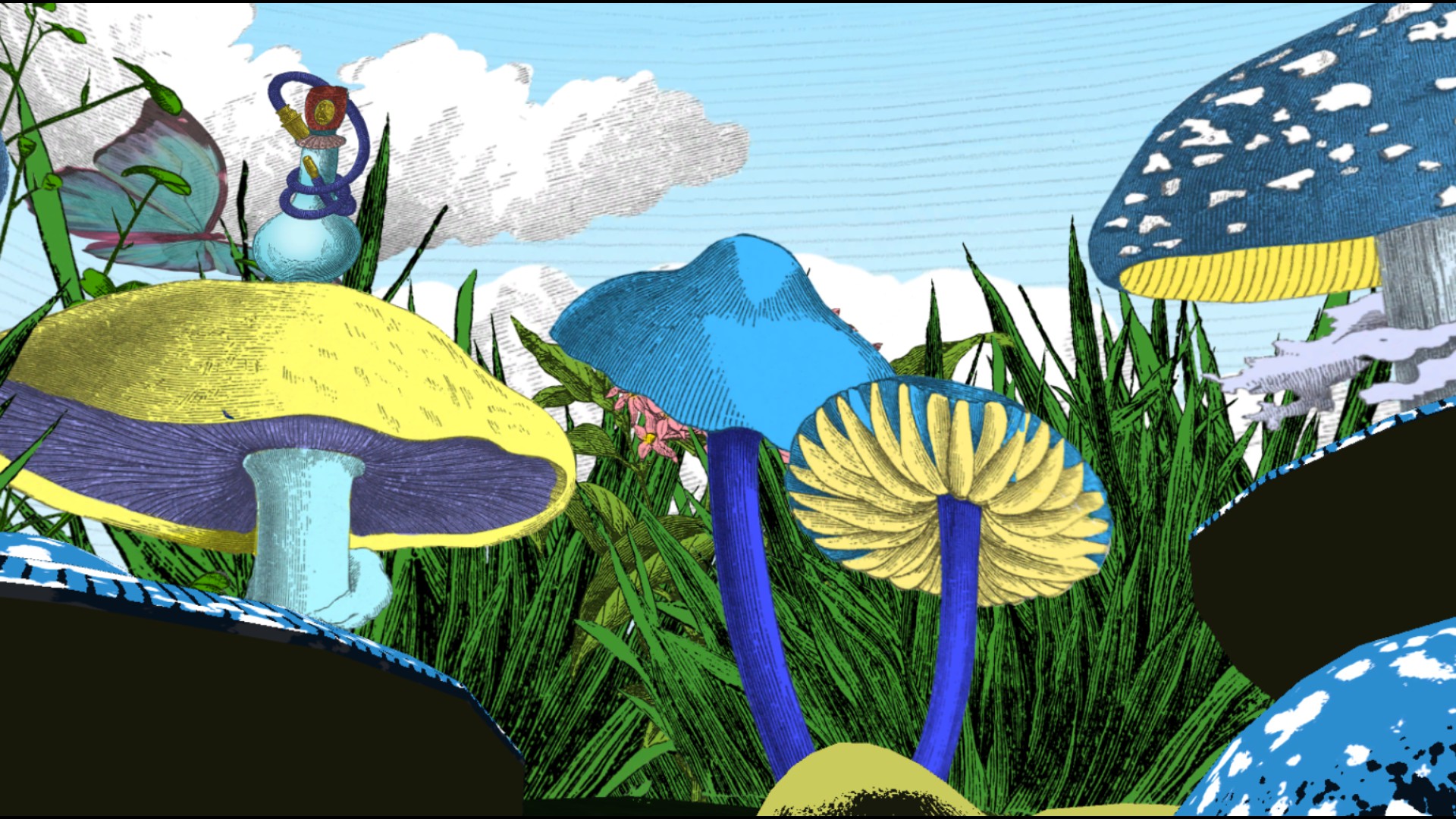


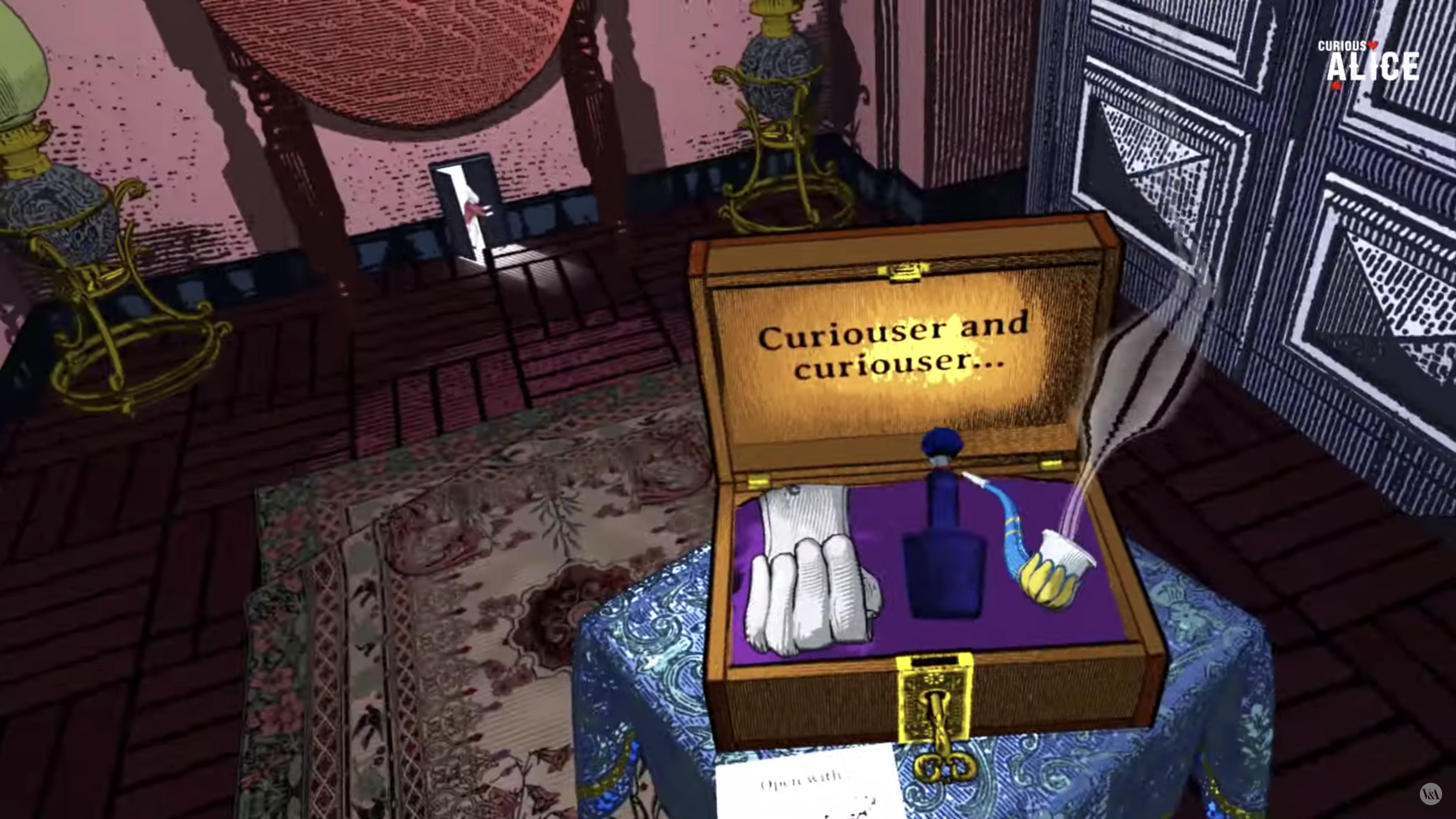
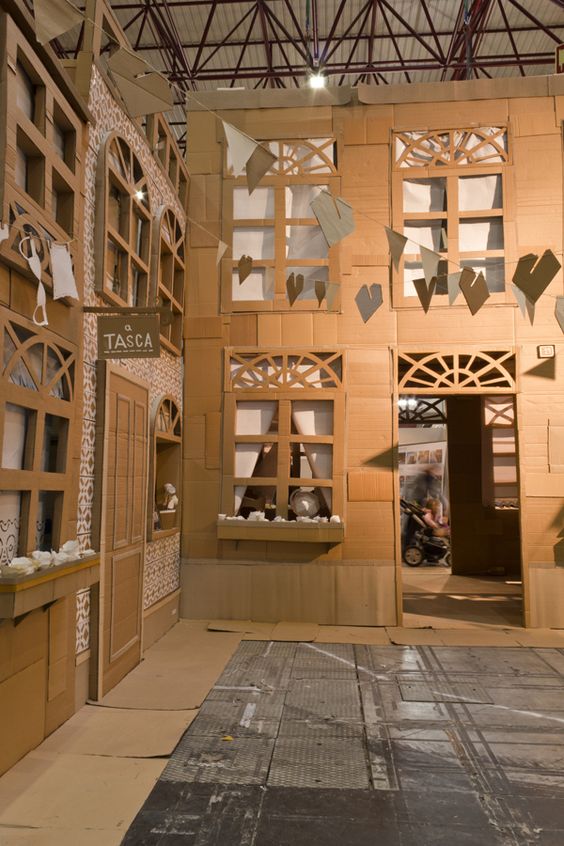
artist research – immersive spaces
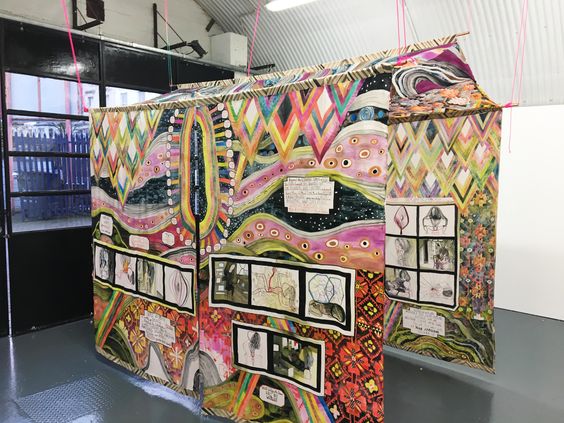
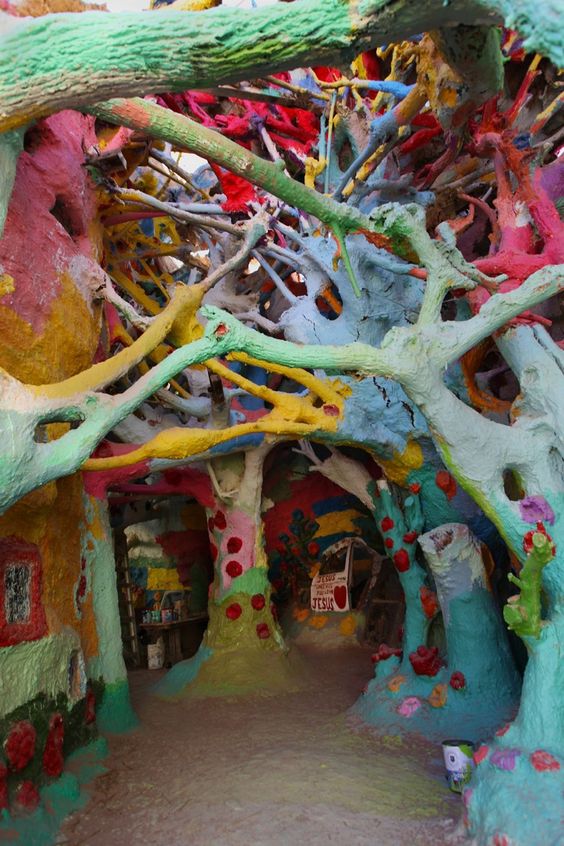



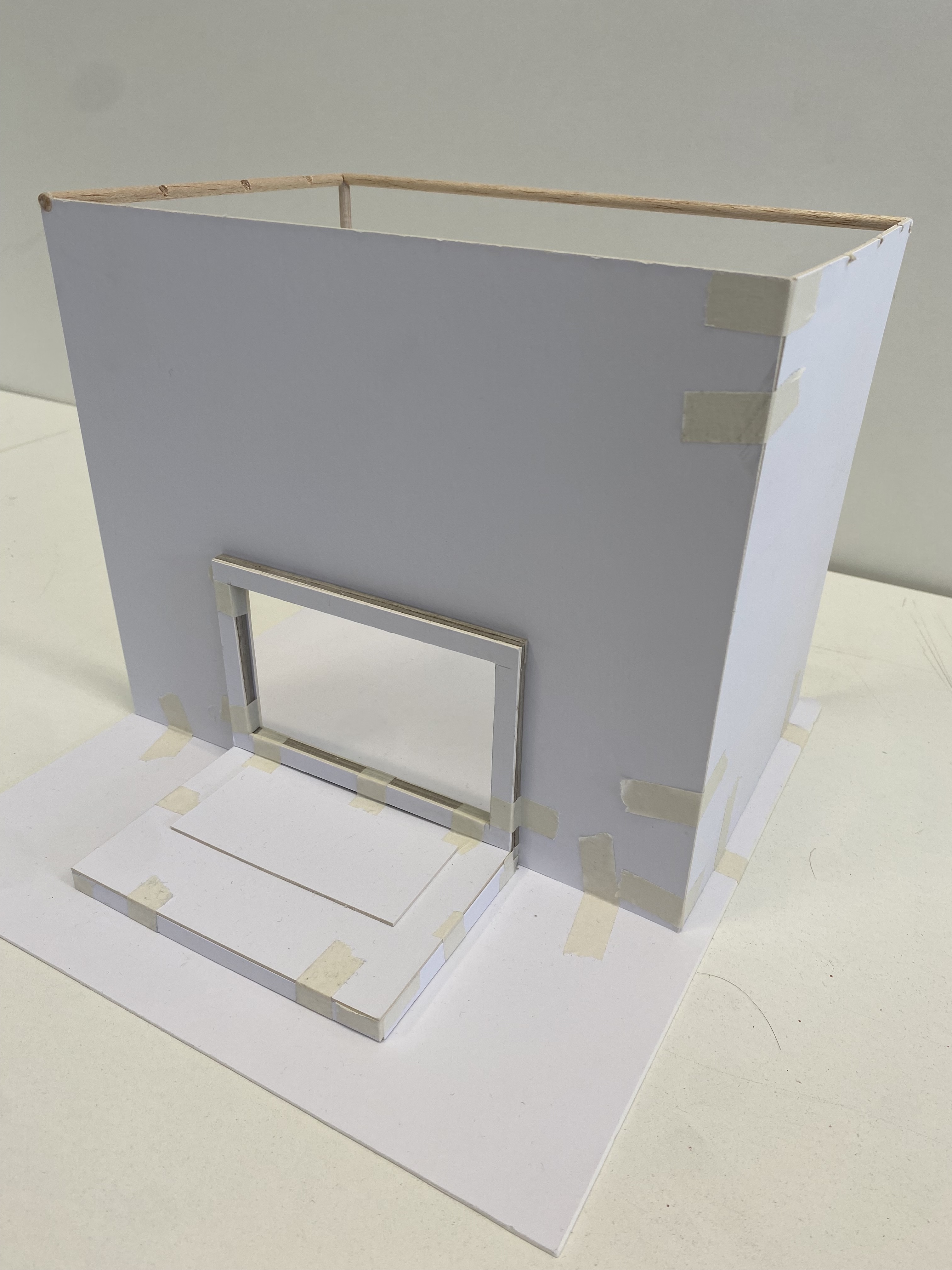
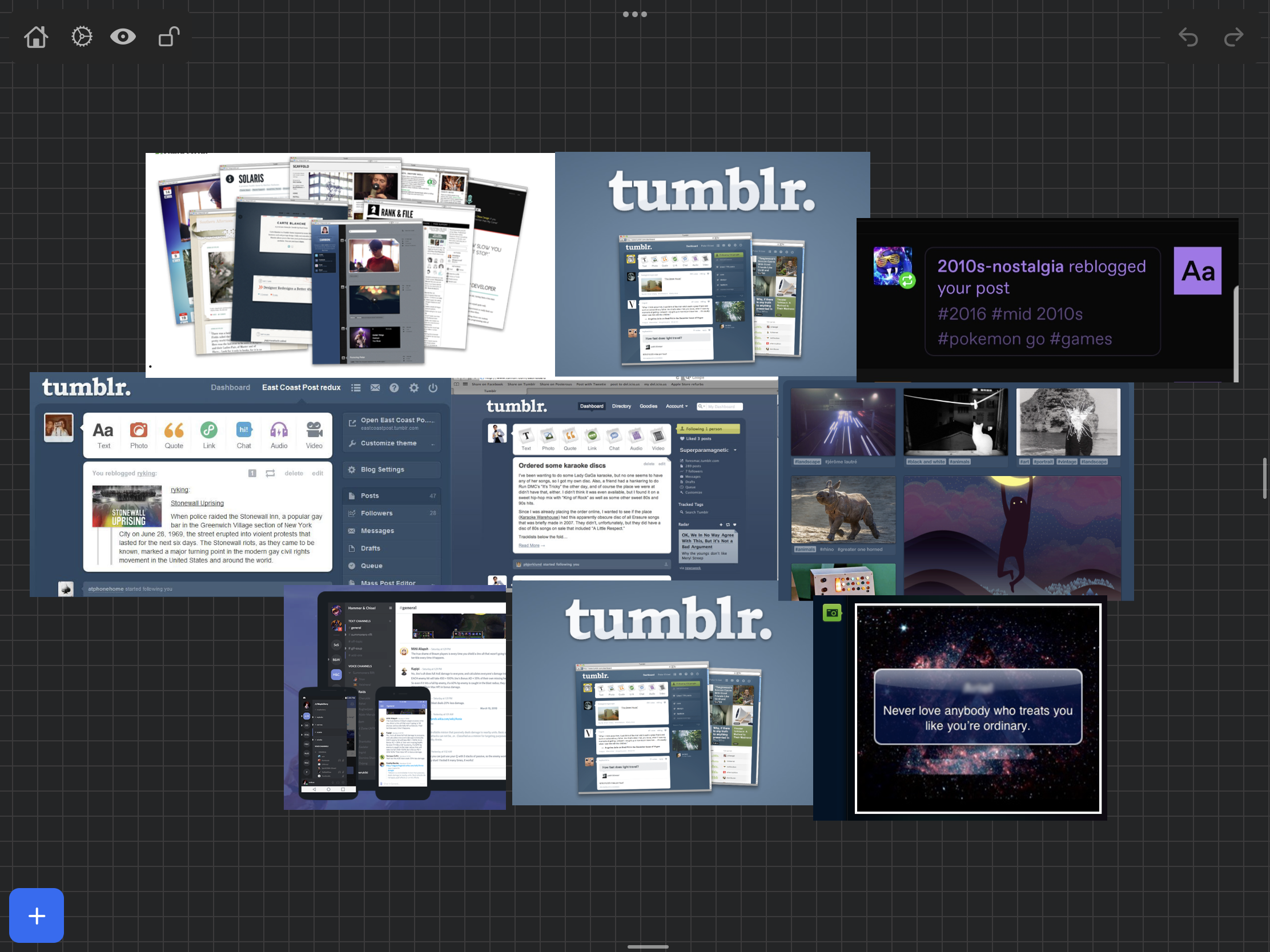

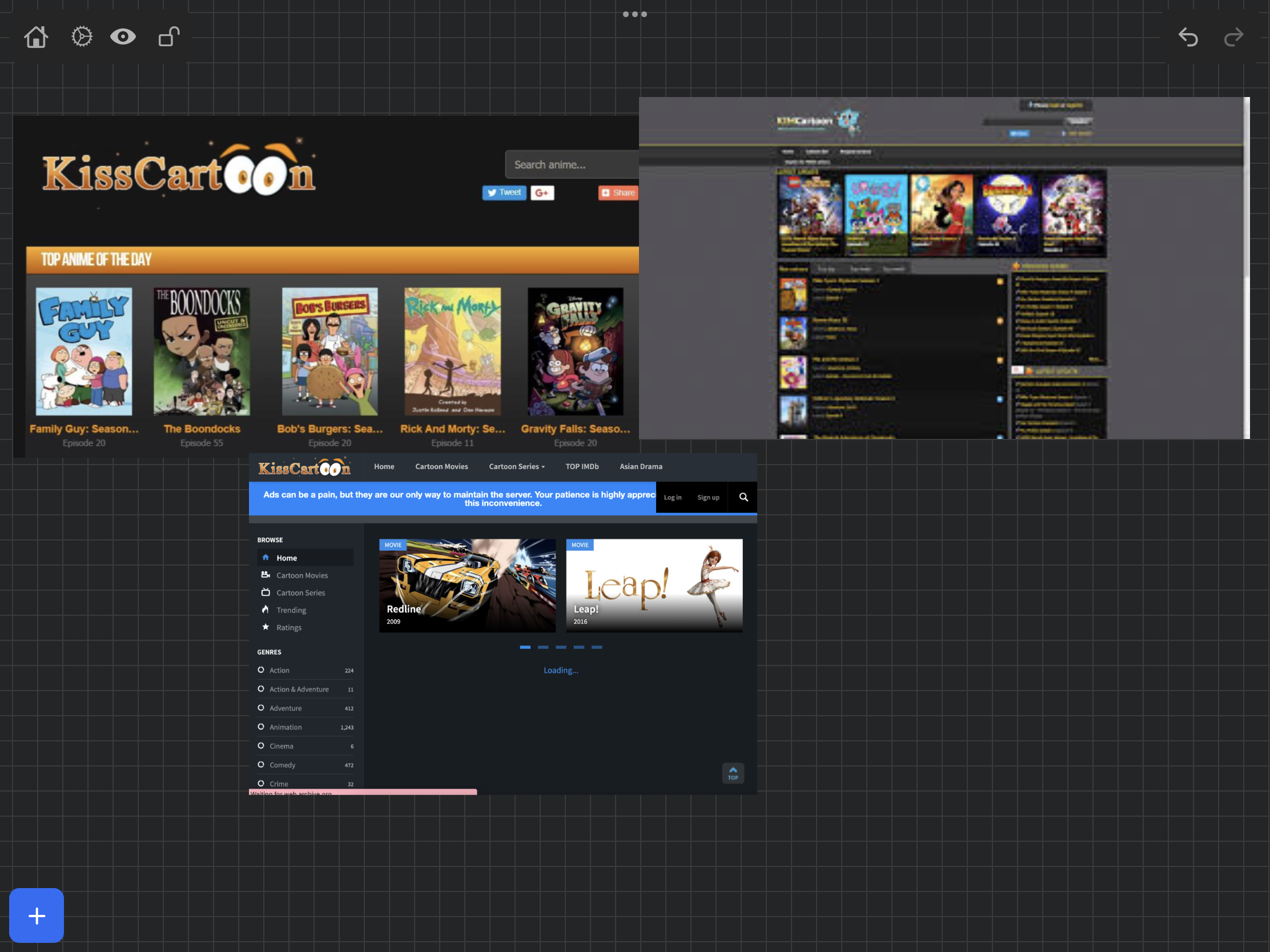
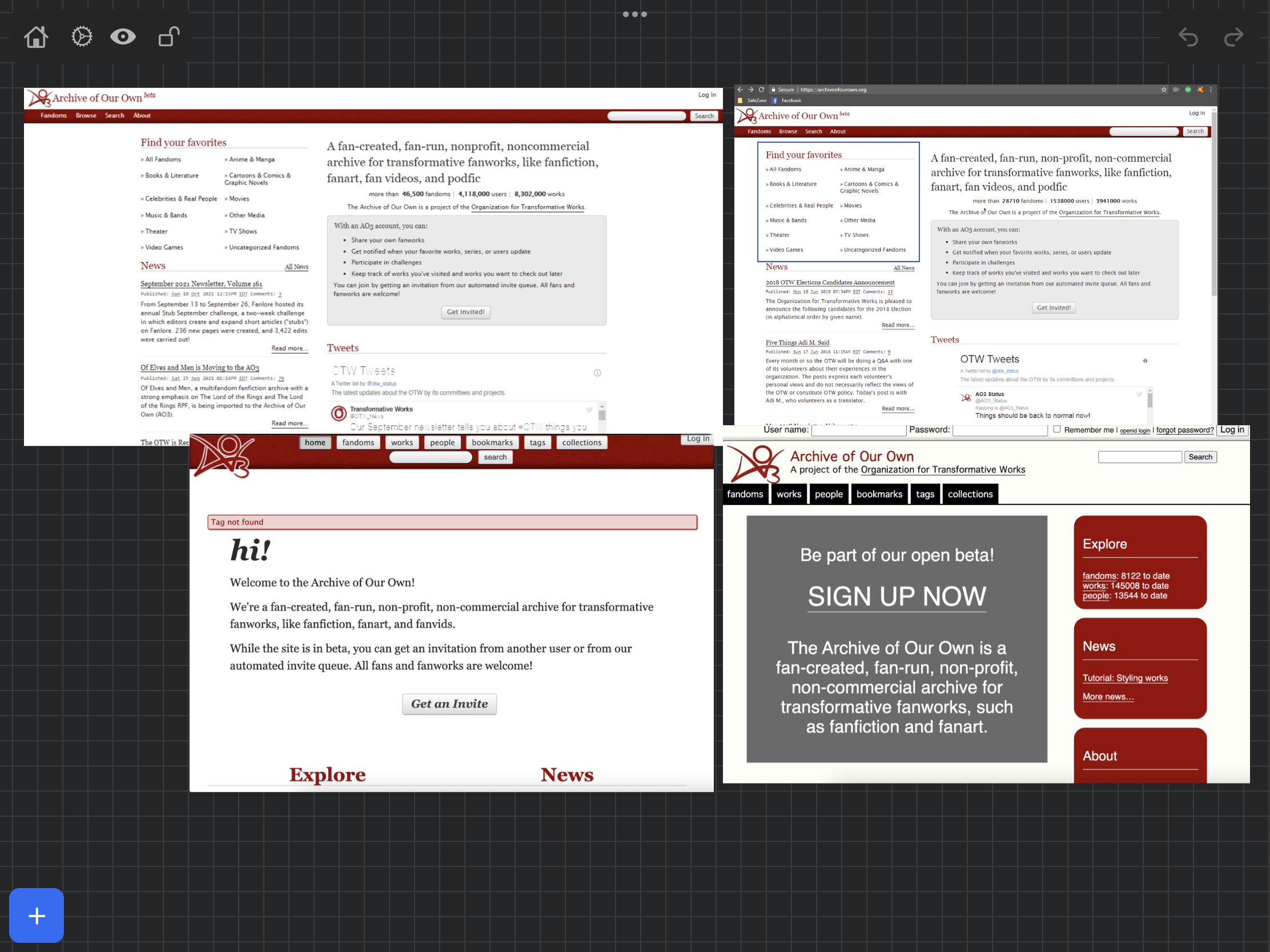

[my model for the initial structural design] [reference images of 2010s website interfaces I collected using The Wayback Machine]
The preliminary design used too much new board and we decided to use the inspiration of older, boxier computers and booked a meeting to see if we could borrow the full right-side wall instead of build one from scratch. The laptop would have also needed to have enough structural integrity for people to walk on which further complicates construction and risk assessment, as well as extending too far into the exhibition walkway.
We considered various options for the fabrication of the exhibition’s other elements and talked to the SPCs about what we could book into. The keyboard materialisation ideas included using these sticky foam squares we found from the scrapstore as keys, creating a huge vinyl sticker of keyboard artwork to be stuck on the ground, and rug tufting our own rug (this was our favourite idea but we didn’t have access to or the expenses for the tools and materials). We continued with the rug concept as we felt it would link best to the bedroom inspiration for the exterior, I asked my dad if he had any spare pieces of carpet lying around his workshop and so we managed to get our hands on a free, big piece of cream carpet that Daisy was able to carve the keyboard shapes into. The curtains were another aspect that changed a lot through our designing and making process. The curtains were going to hang entirely along the interior walls, with the slight opening in the front for people to climb past the screen into, and the Windows hills desktop background mural would be painted onto them.
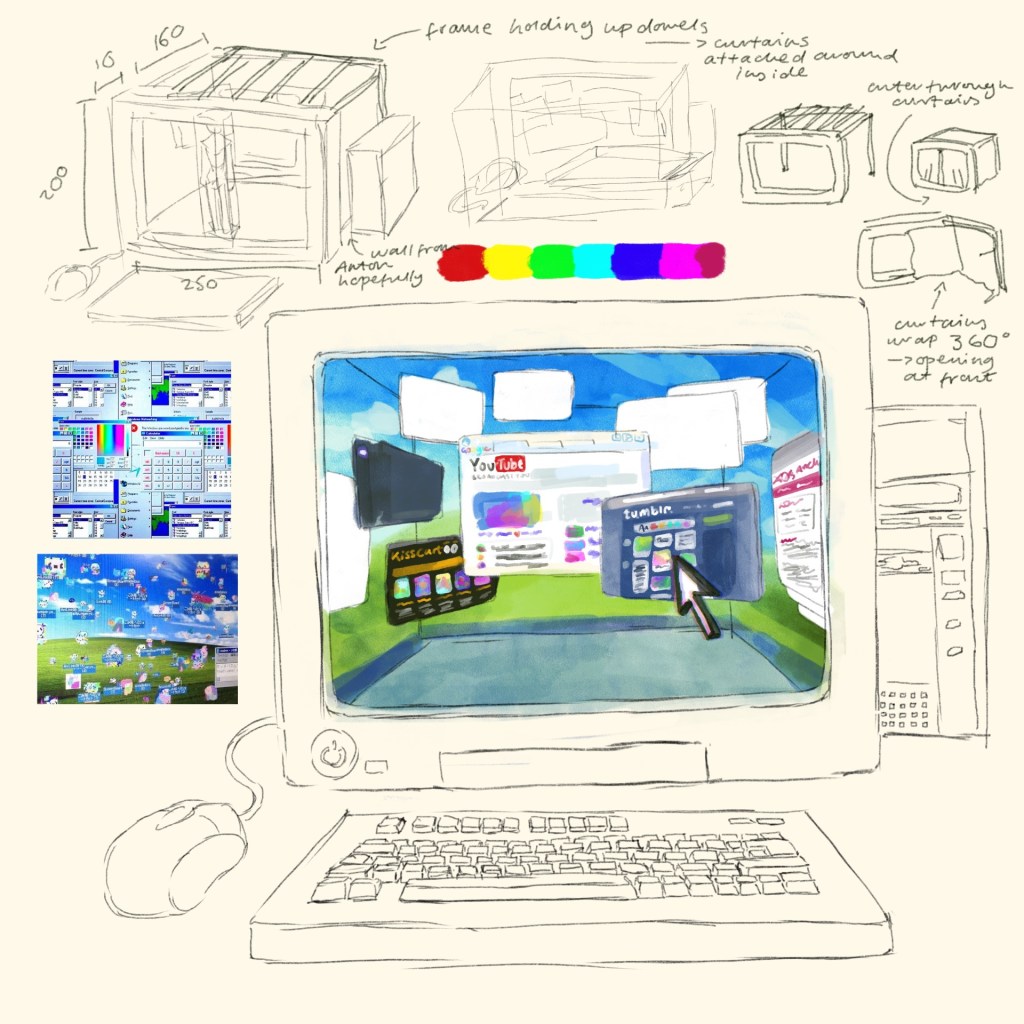

[my concept sketches for the structure] [my communication with fabrication logistics]
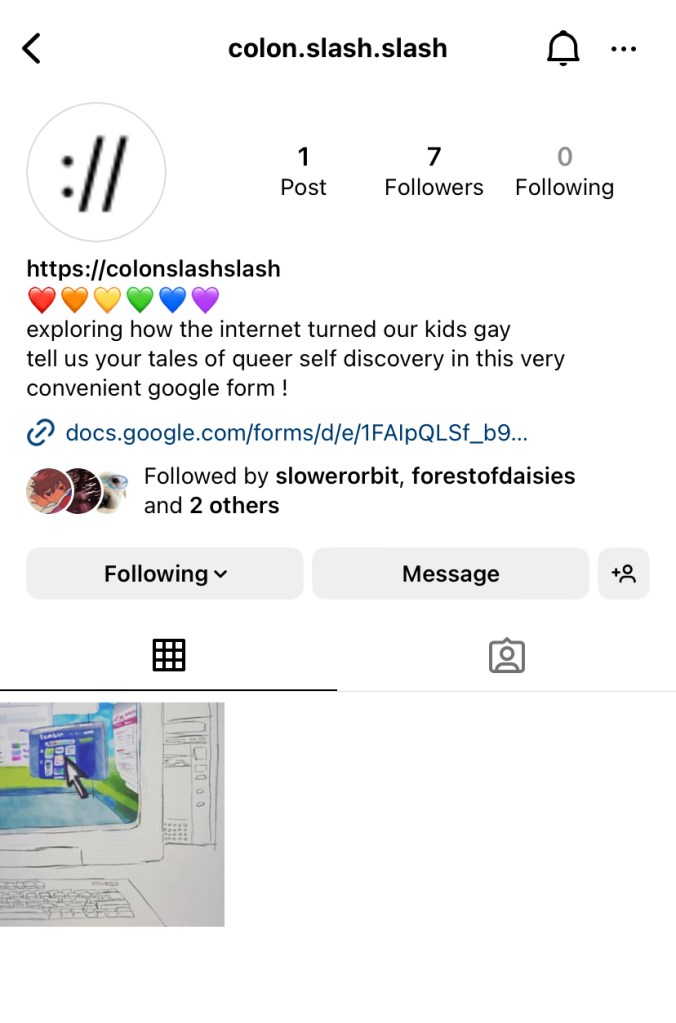
i sorted the instagram profile appearance and made the first post
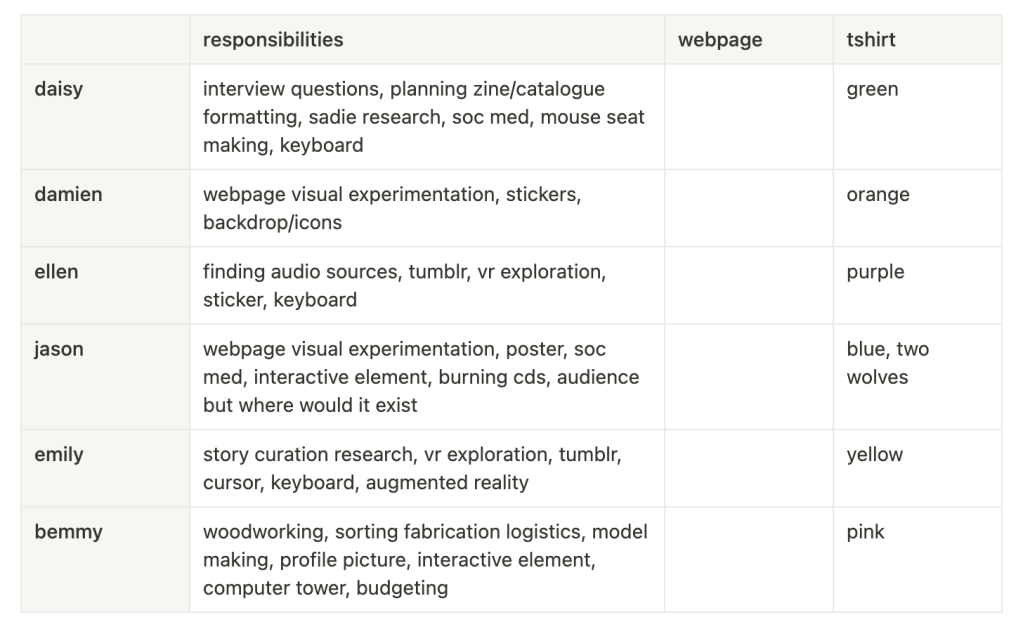
assigning aspects of research, designing and making to individual people so we can make sure everything is being considered by at least one person (i’m ‘bemmy’ as we have 2 emilys!)
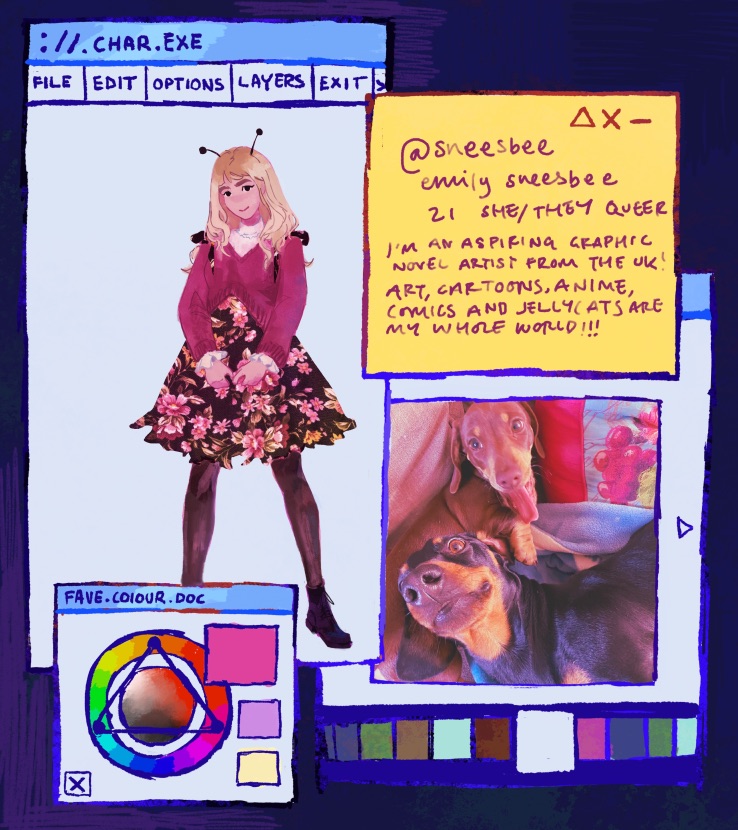
[my social media profile art, background art by Jason]
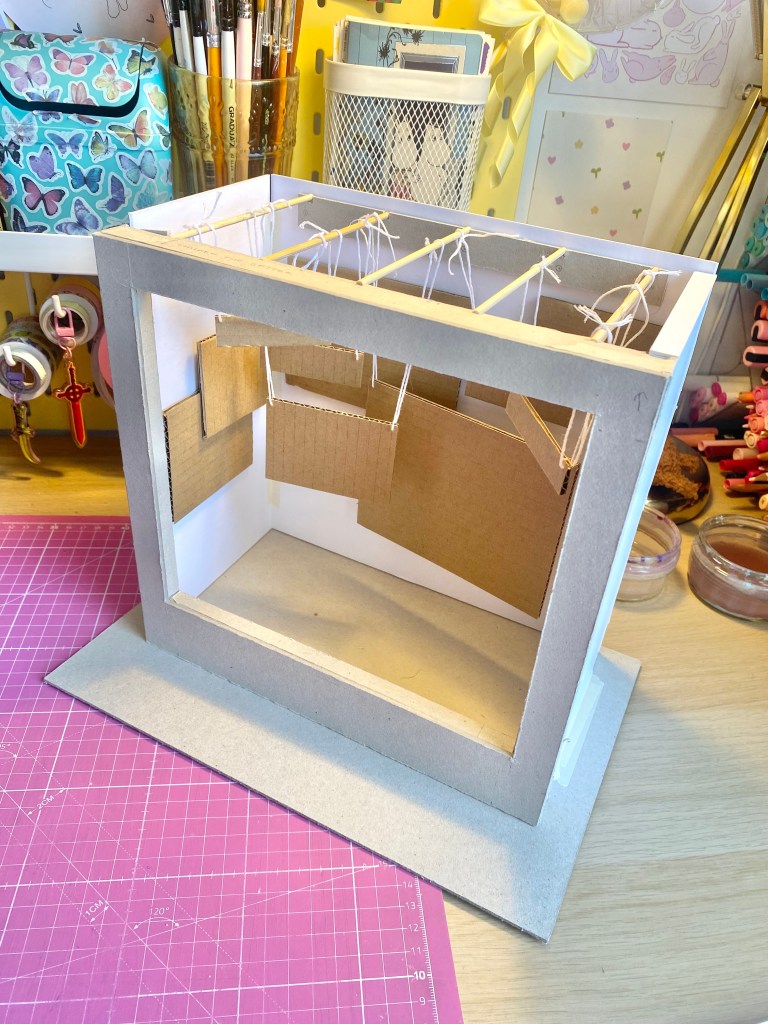

[my final model taken to fabrication]
I sorted all the structural and making logistics; weighing up which materials would work best/be within budget, planning how to best use the space allotted to us, working within the measurement constraints of using the pre-existing wall we would be borrowing, webpage sizing and placement.
We had a lot of back and forth when it came to the materials of the webpages, we weren’t able to find one material that would both come in large enough sizes whilst also being in budget. However, I actually like that we all ended up using different materials that all had their own quirks as I think it fits the visual concept of a patched together internet made by regular people with rudimentary materials. Rather than something shiny, perfect and corporate, as that doesn’t reflect how these internet communities we originally created. They were largely homemade by a worldwide collaborative of queer people, and I like that our exhibition encompasses that on a smaller scale.
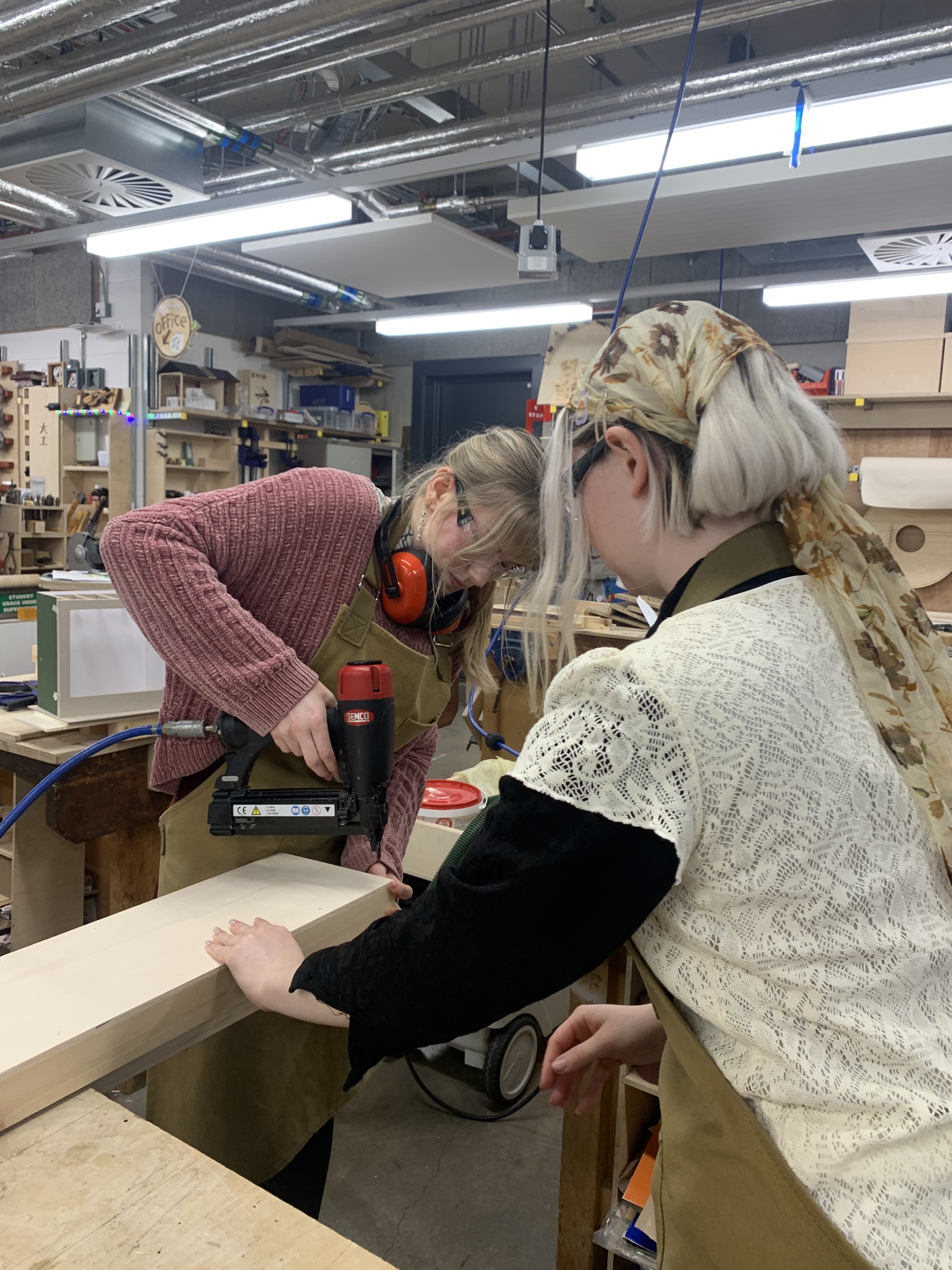


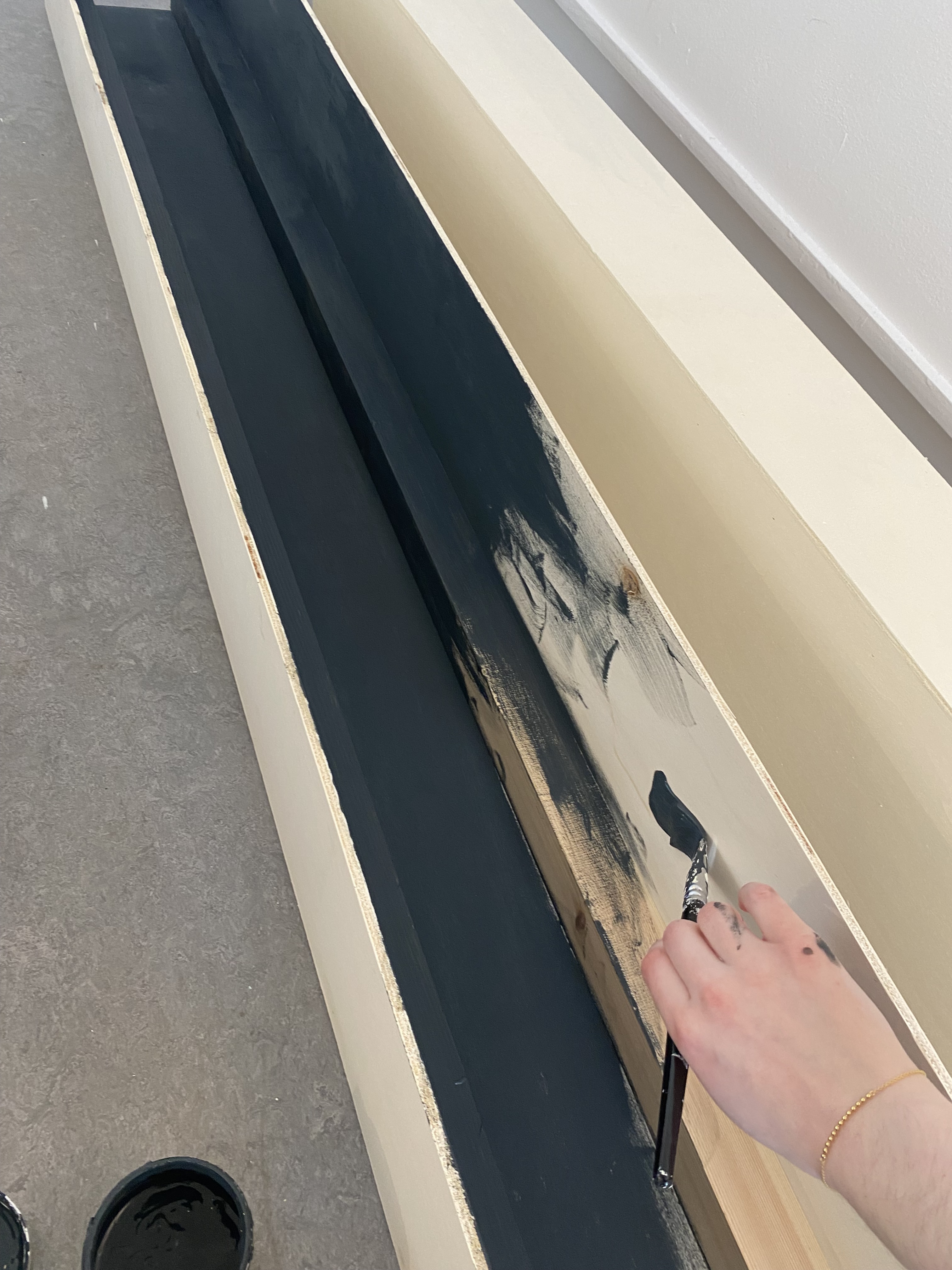
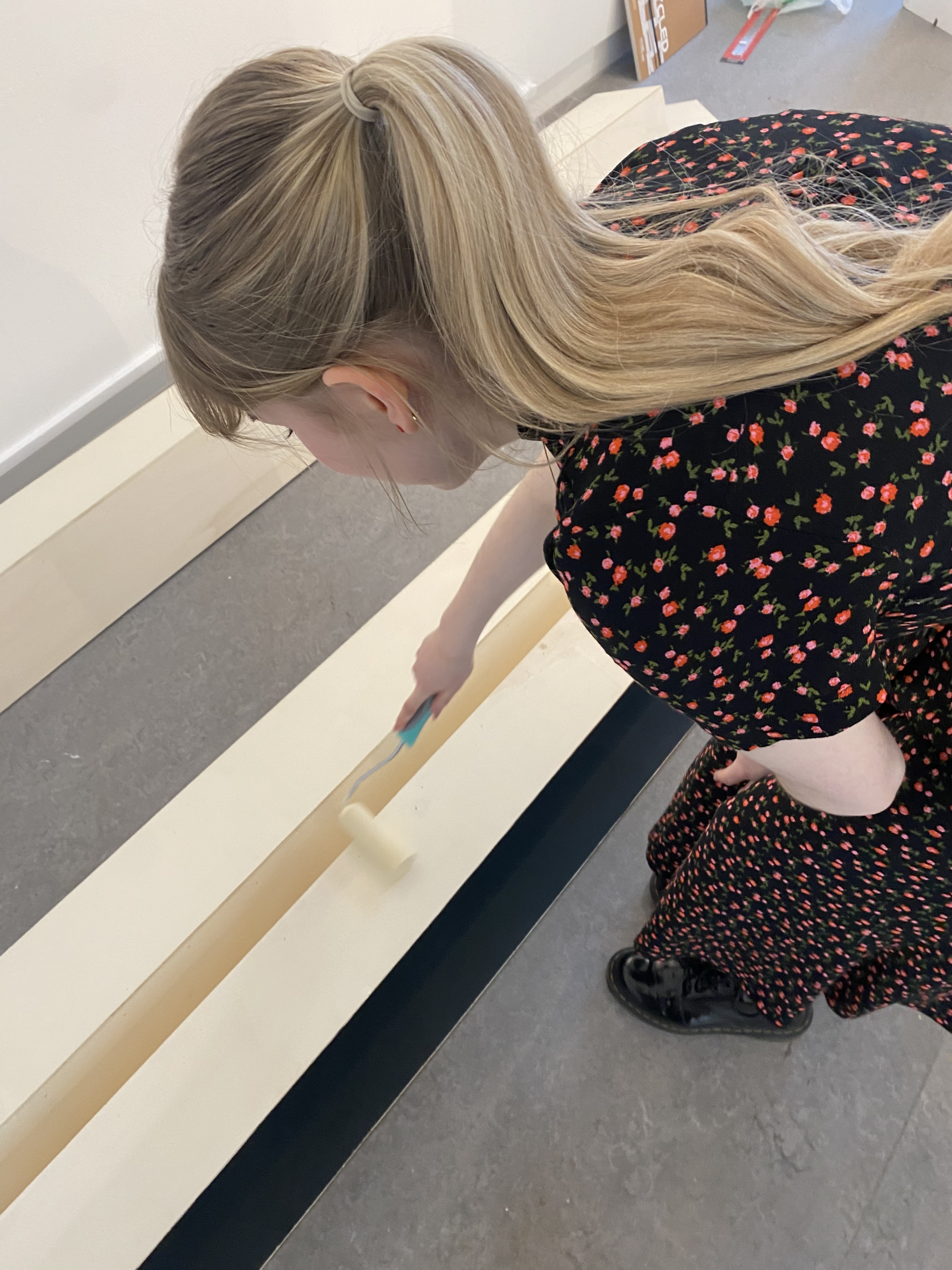

[fabrication sessions working to assemble the frame] [painting the inside and outside of the frame] [adding black paper inside to hide the structural beams]
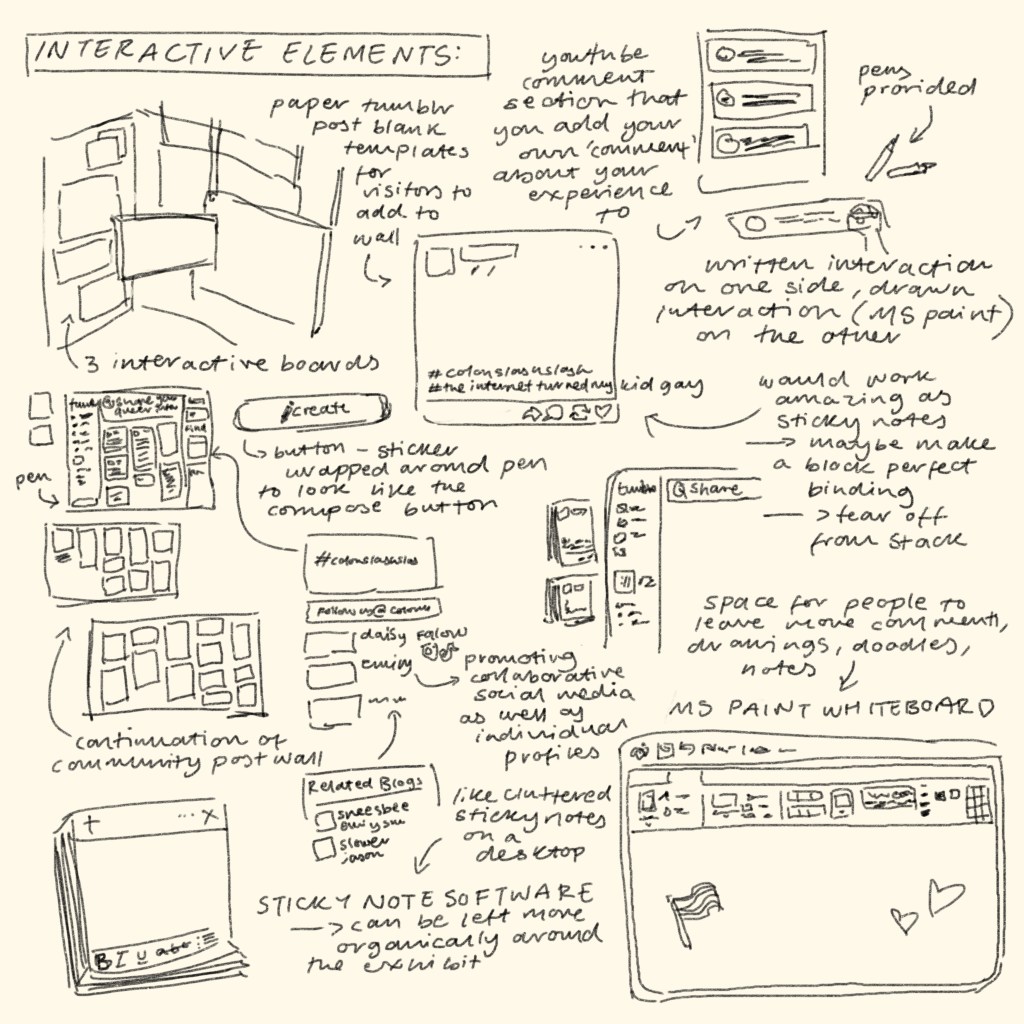
[concept work on interactive elements for the exhibit]


[my digital mock-up of the webpages layout] [correspondence with the group on assigning work]
A large part of my role in the group ended up being organising and coordinating. We had discussed the role hierarchy at the beginning of the project and said that we would all hold even footing, however as our group expanded with 2 more members it became increasingly clear that we needed a more structural organisation method in place. I tried to organise as much as I could, but it was never allocated to me definitely and I still had all my own already-allotted work to do, whereas if it had been said in the beginning I think I would have been able to coordinate everything much better.
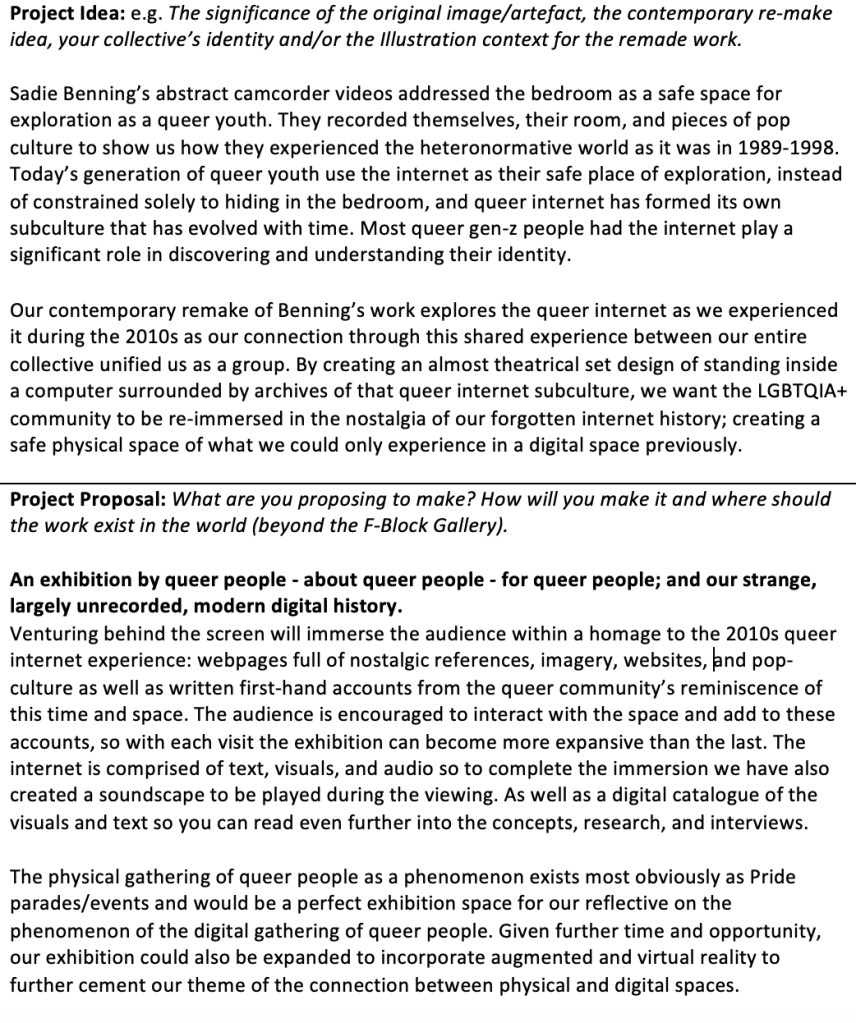
[my writing for the proposal]
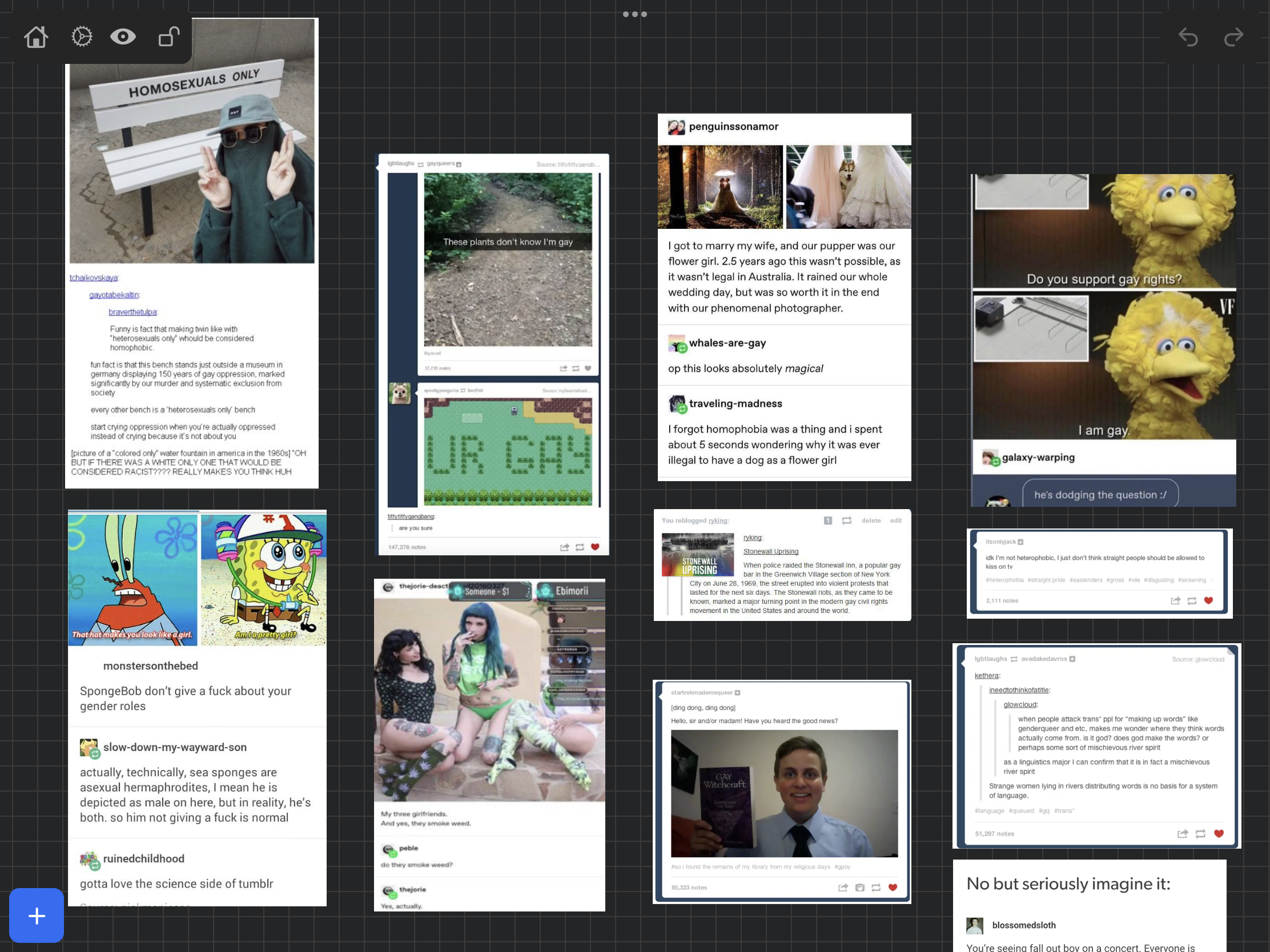
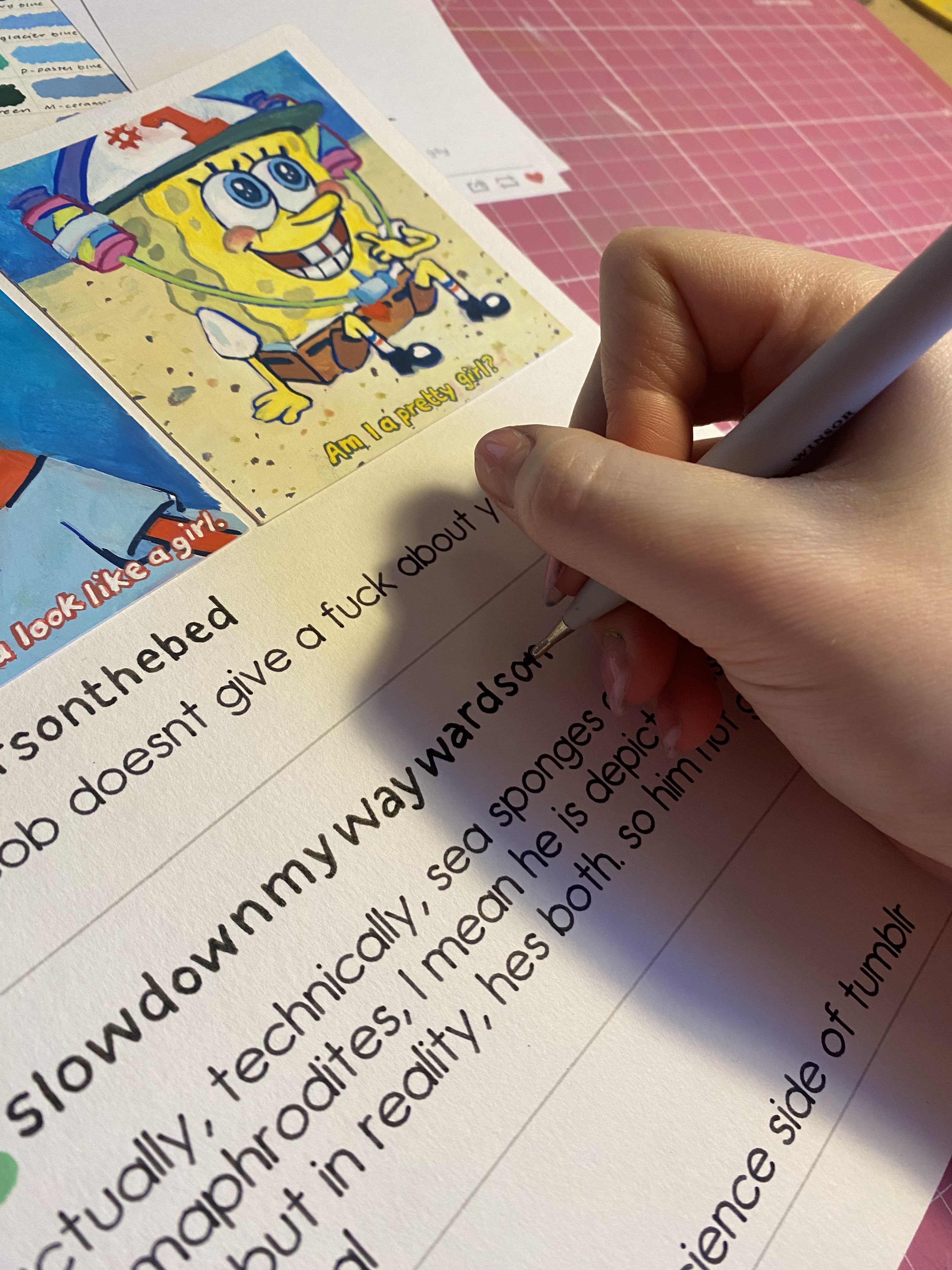

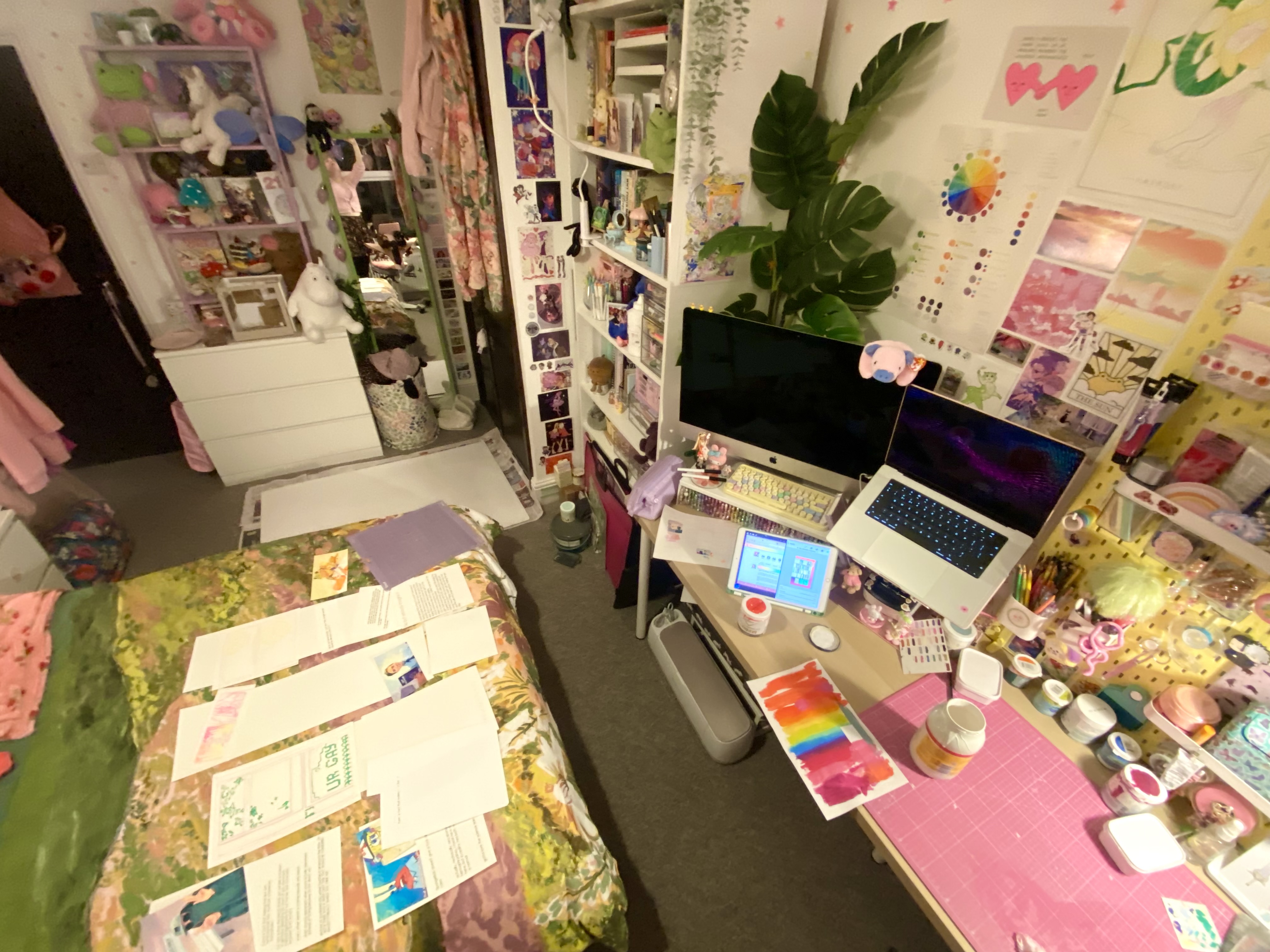
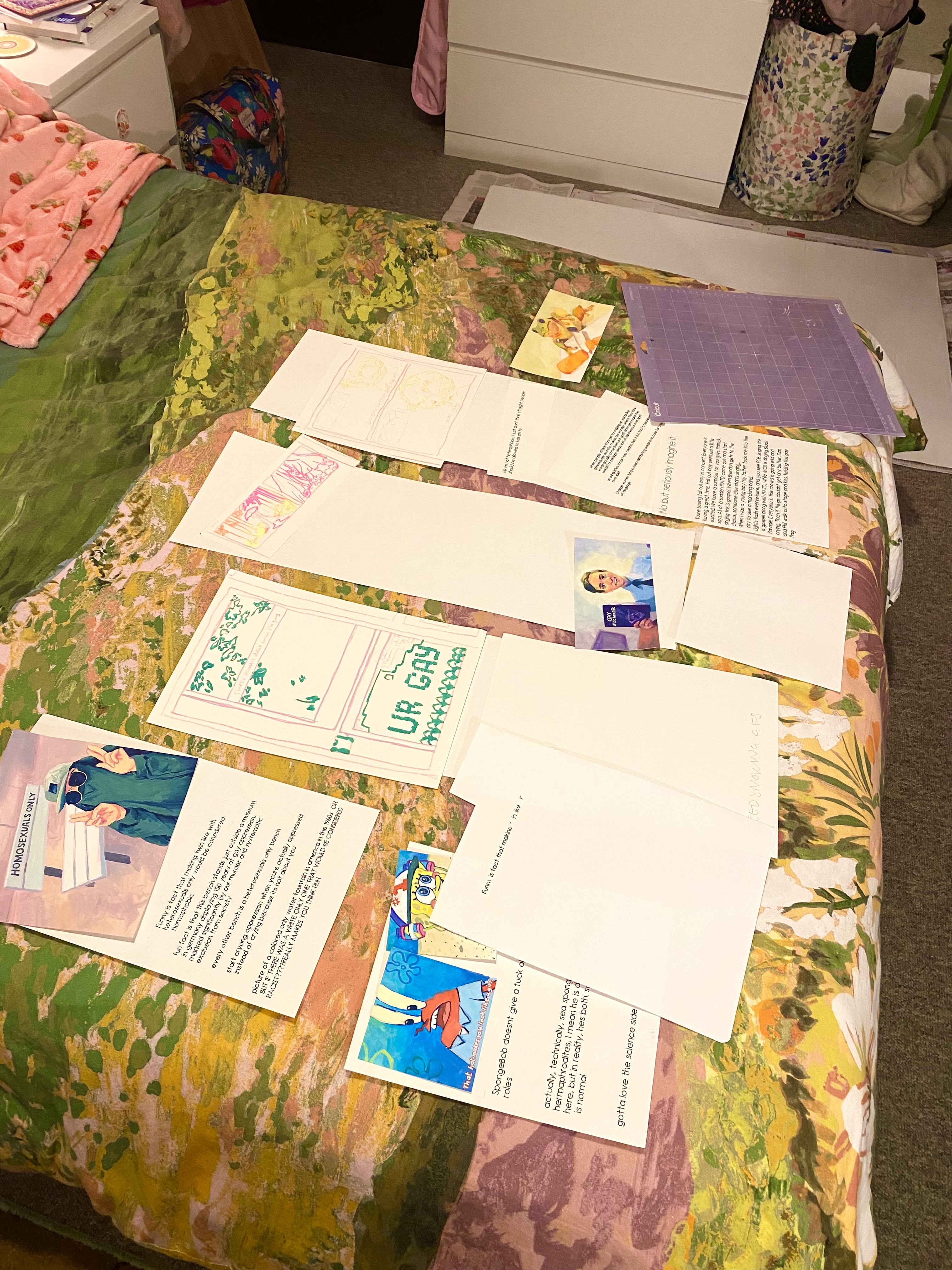
[references for archived tumblr posts] [designing and making of my tumblr webpage] [gouache re-paintings of post imagery]

[my finished tumblr webpage]


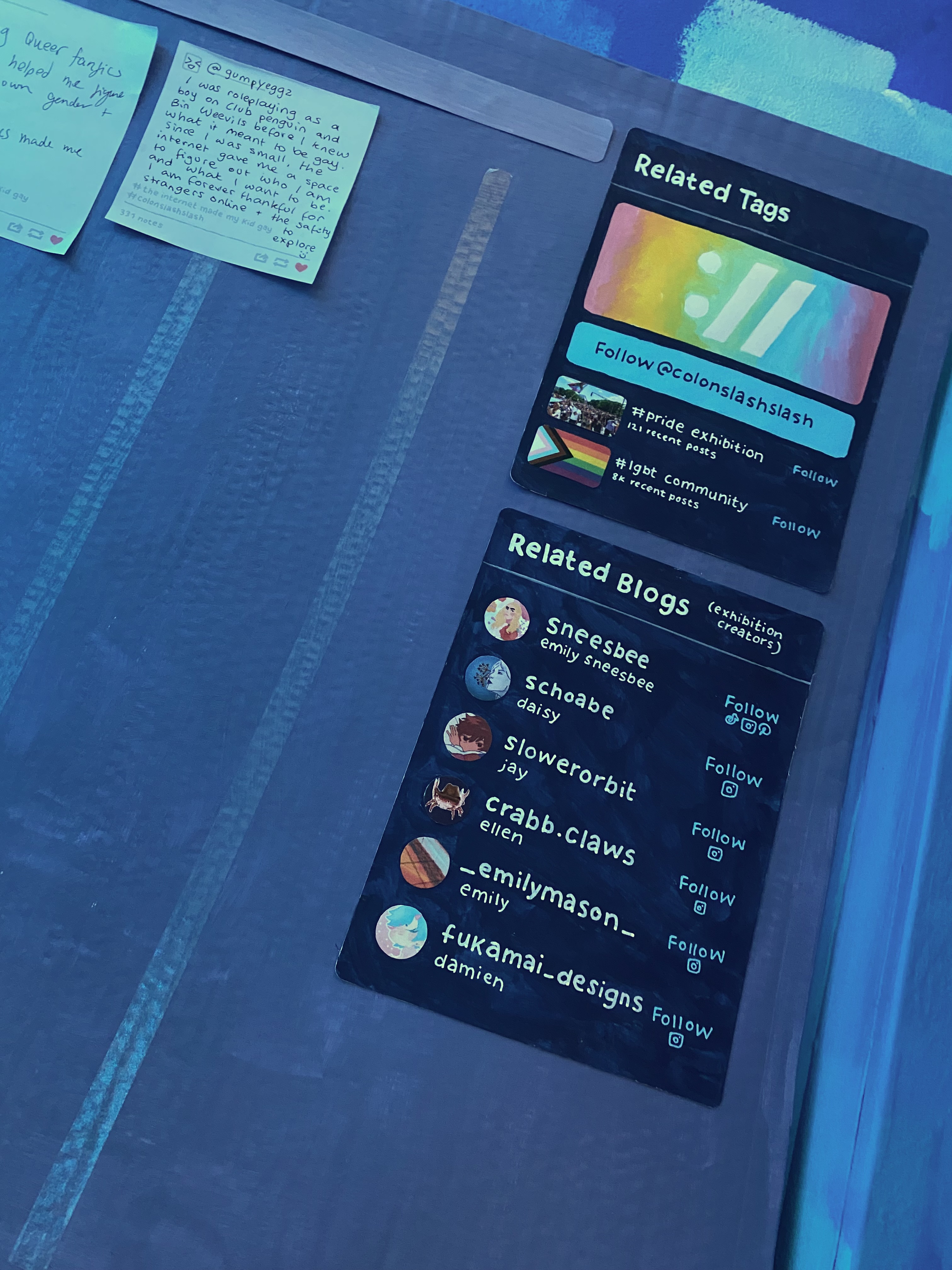
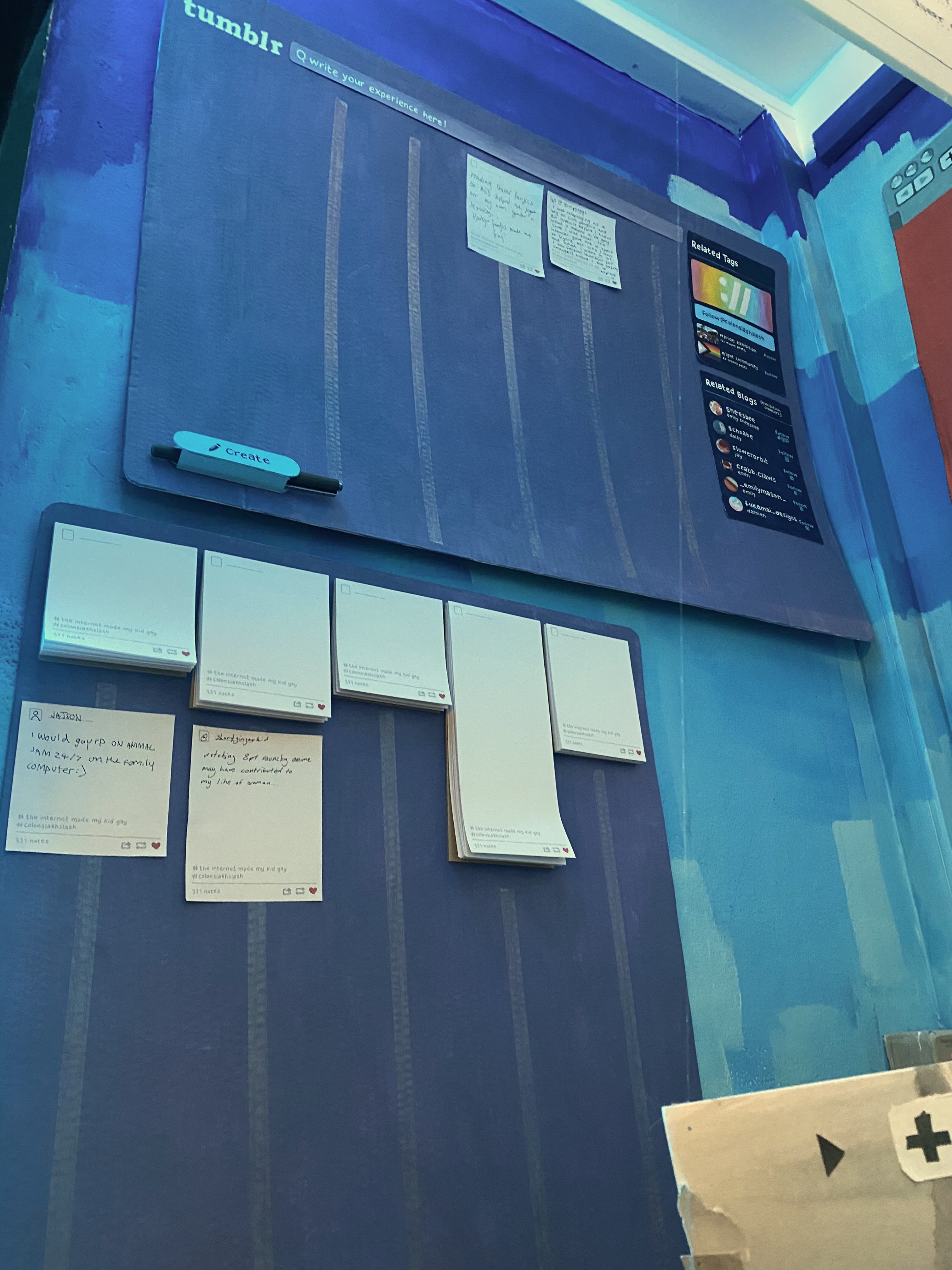
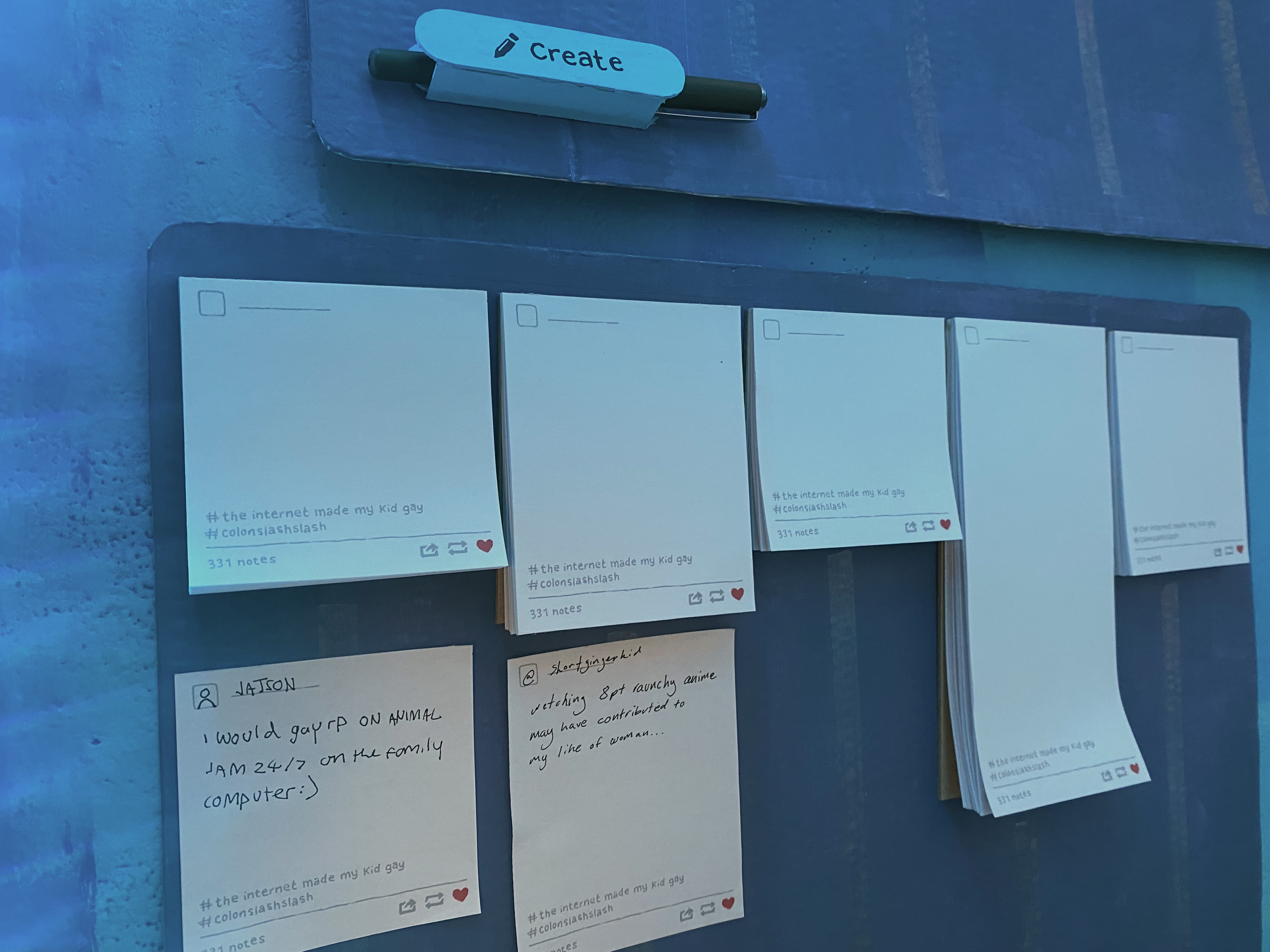
[creating tumblr post sticky notes for my interactive tumblr boards] [collective’s social media profiles I presented] [pen holder I made for interactive board]
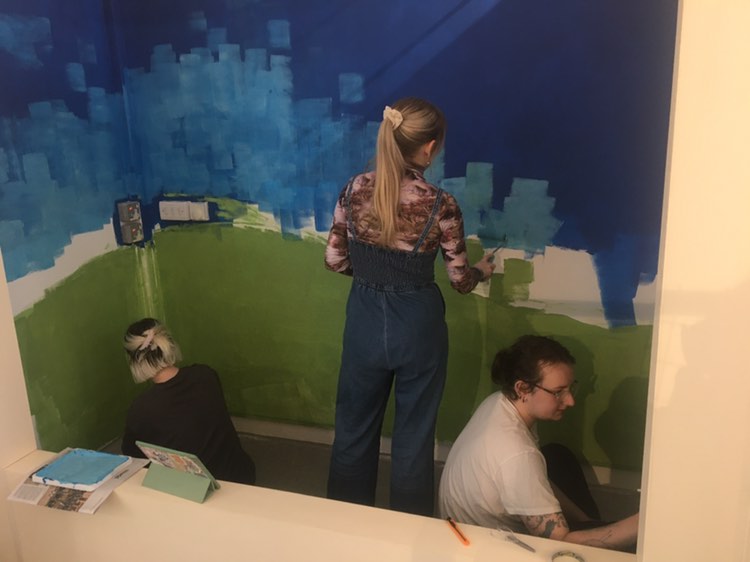
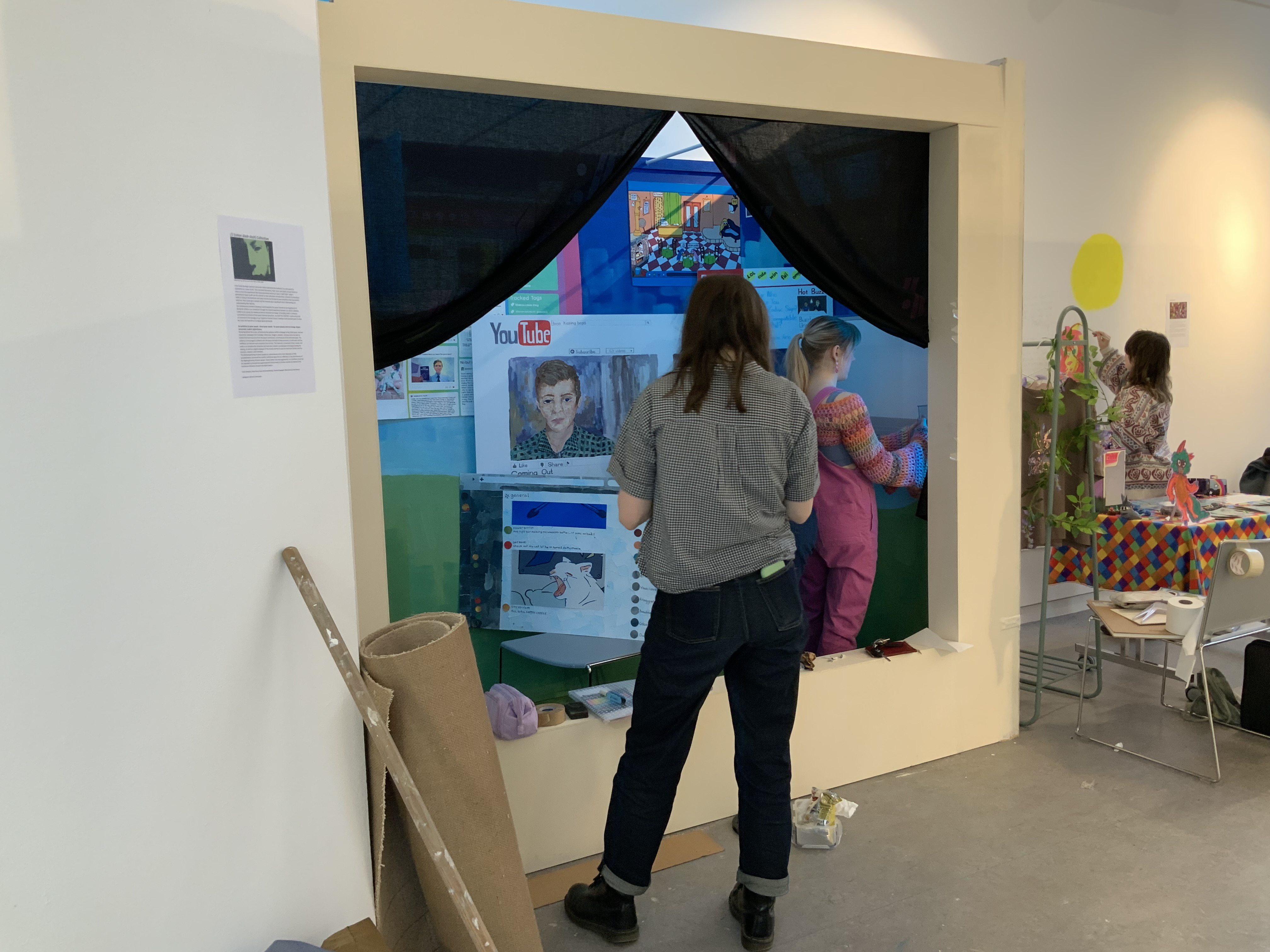
[Daisy and Damien painting the base colours for the mural and me creating the Windows hills artwork] [setting up the webpages in the final exhibition]
 sneesbee