explore
Thoughtbubble
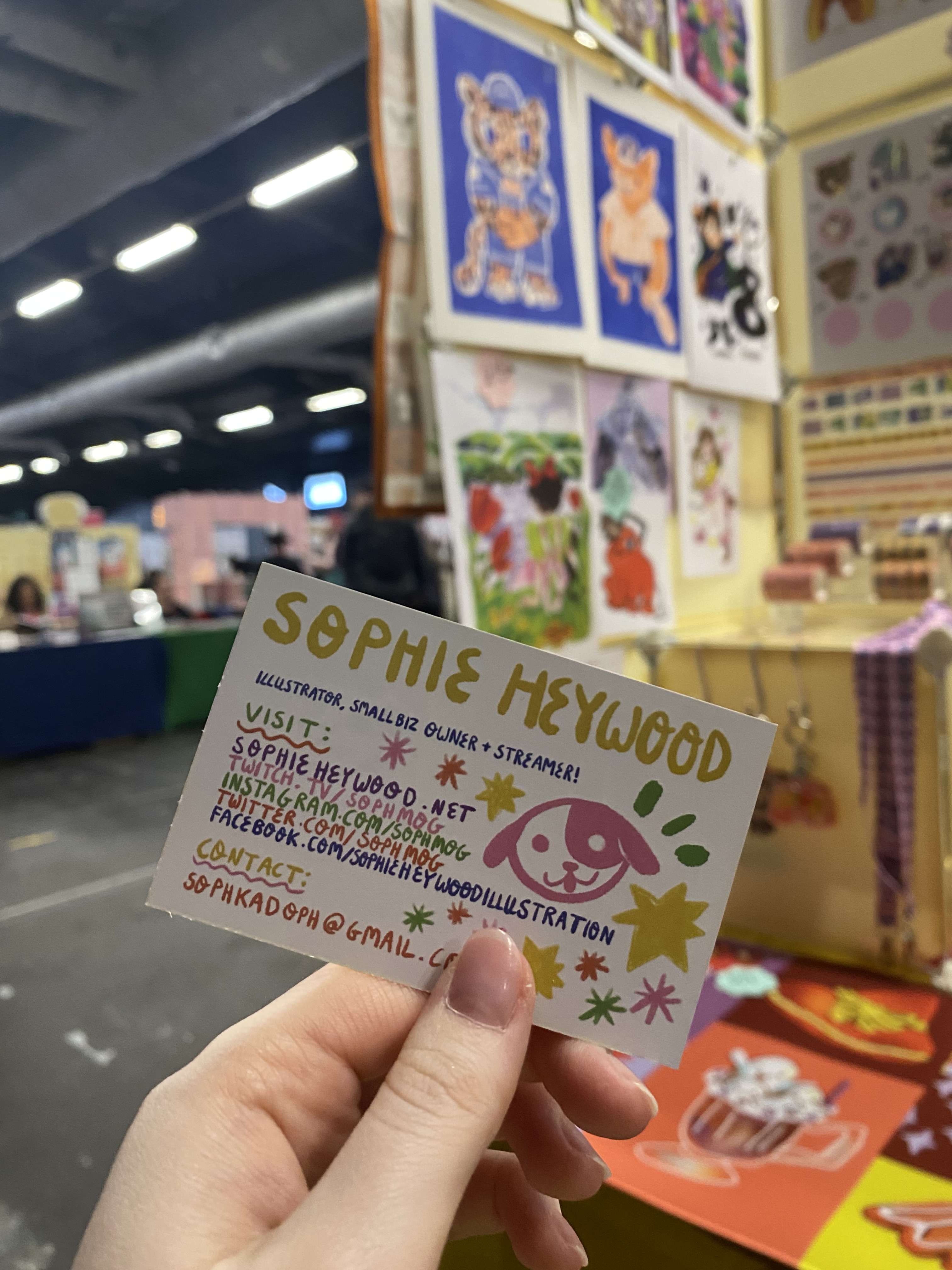
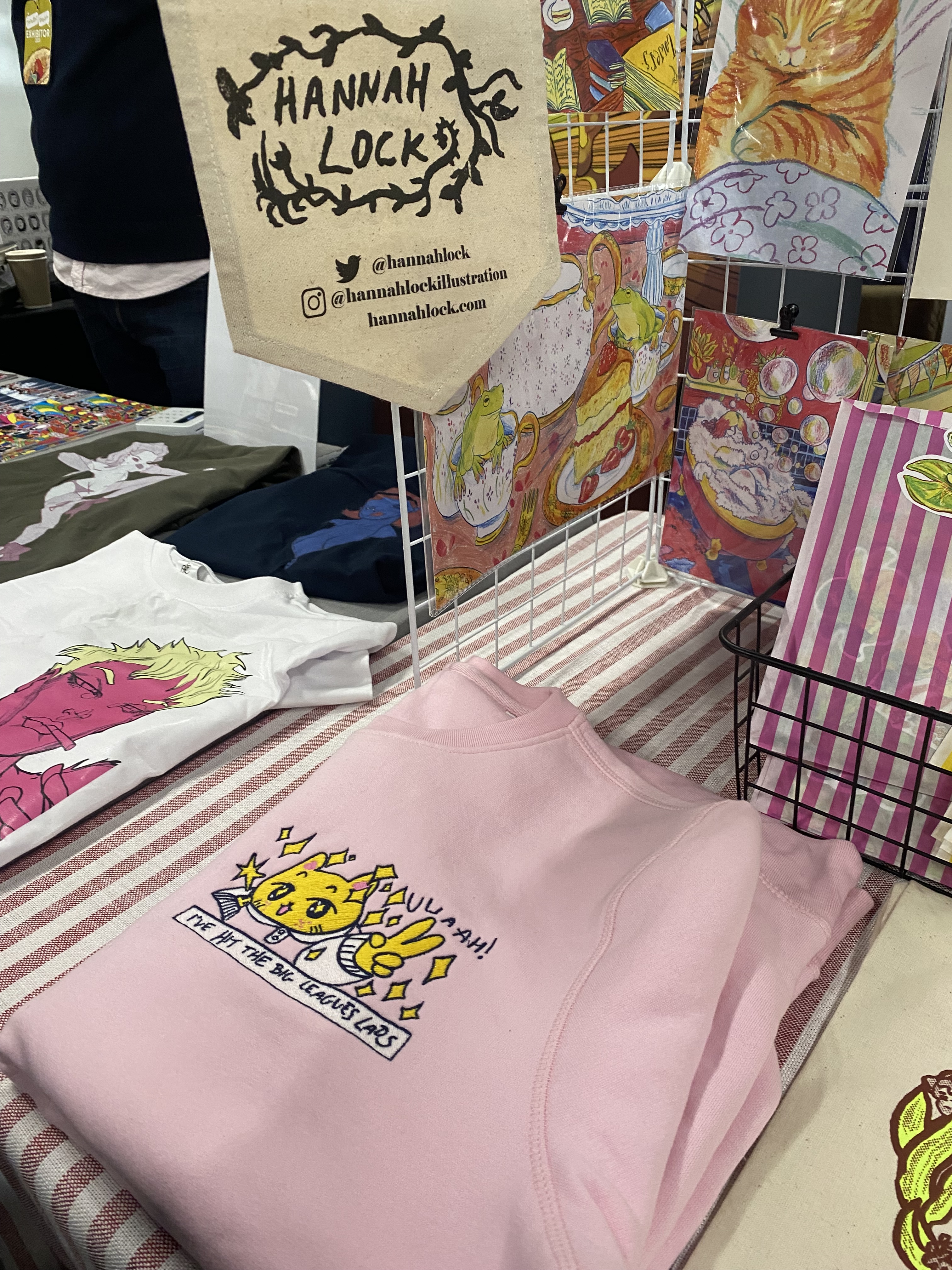


Thoughtbubble is a comics festival held in Yorkshire once a year in November. I was finally able to attend in 2023 and, among all my visits to convention artist alleys and art markets, this was my favourite festival I’d ever been to and where I think my own work would fit best. I also connected with a lot of fellow artists I knew/had made friends with over social media, and I would love to further join the in-person community of creators.
Comics take the precedent (in all the forms they come in: graphic novels, zines, anthologies etc) though you are still able to get accepted with “incredible, eye-catching” illustration. Thoughtbubble strive to promote people creating new, original work; comic work with powerful or interesting things to say; as well as traditional comic creators.
The intended audience spans to anyone with a love for art, especially in the field of comics and illustration whether as a creator or consumer. People attend to buy merchandise, support and connect with artist’s they like, and make connections as it’s also a place to interact with creators, editors, publishers, and printers. A good portion of the attendees and exhibitors cosplay, with ticket prices being cheaper if you do, which was a visual tell that fanart is a big part of the festival as does well with the audience that attend.
Applications are open at the beginning of each year for the event in November, requiring you to fill out an online application form asking for details about you and your work. They advise you to tell them a little bit about what comics mean to you and how you became interested in the field; provide links to websites, webstores, dropboxes, social profiles, digital portfolios, and/or PDFs of your comics; photos of past market tables are encouraged too if you have them. The exhibitors are curated by the Thoughtbubble team selectively, but you are added to the reserves list if your application is initially unsuccessful.
A creator table costs £185, half a table being £90. Extra passes, electricity, backing board hires and website banners can also be purchased to assist in your set-up and advertisement.
Natalie Haku interview


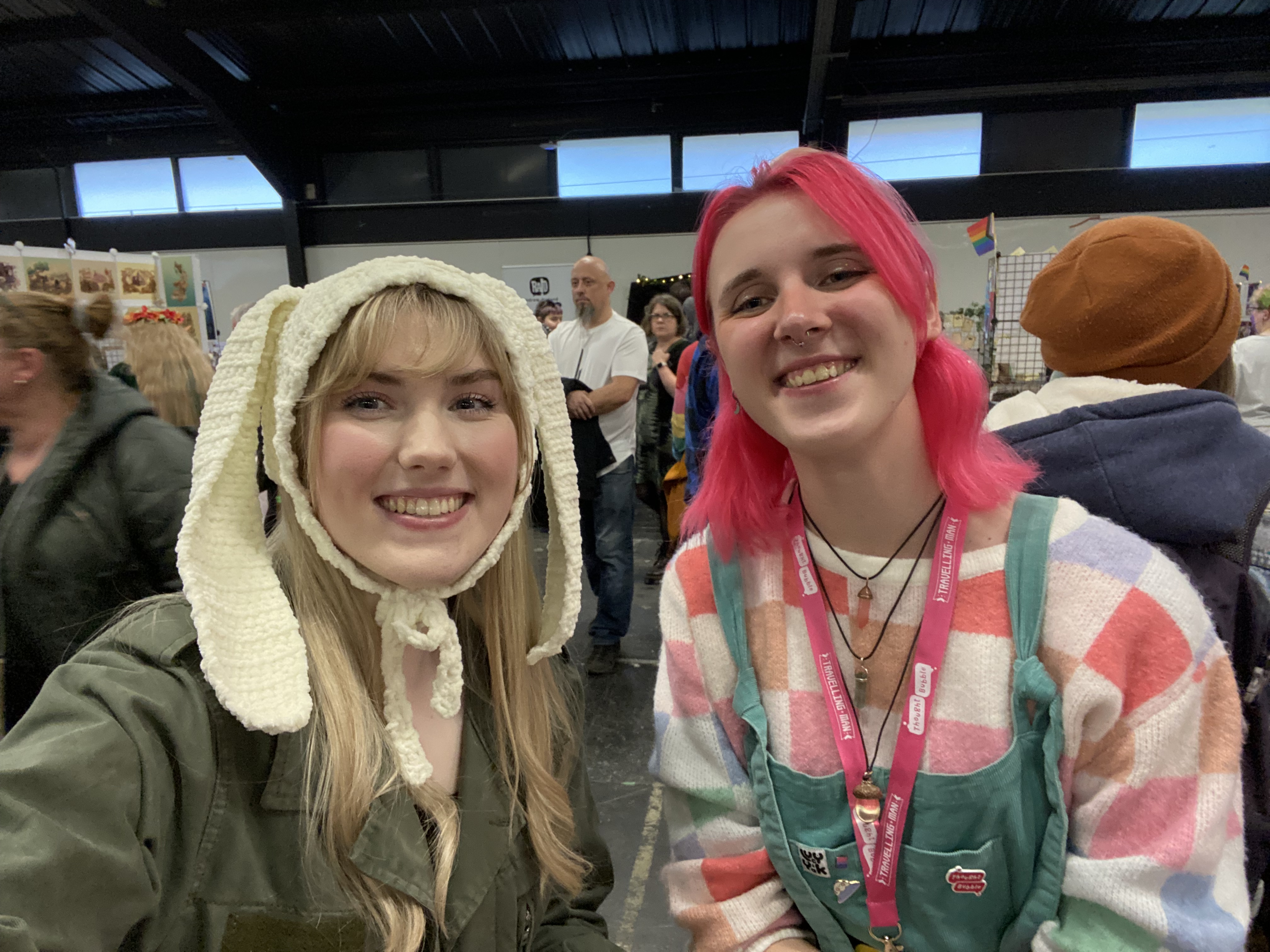
[Natalie has participated in collaborative stamp rallies with other artists to help promote each other’s work to a wider audience] [photo of me meeting Natalie at Thoughtbubble]
I asked Natalie about her experiences with tabling at Thoughtbubble as well as her general experiences with artist alleys and conventions.
What kind of artwork is accepted into different venues? What are the application and selling procedures? What presentation methods do you use and what are the logistics?
“Hello! I’ve been attending comic conventions since 2011, and have been tabling at them as an artist since 2019.
Events themselves are incredibly different in what they promote, artwork they prefer to be exhibited in themes and styles, and how their application processes go. I won’t list every event, but I’ll give some brief notes on a few different ones that have some unique points:
Doki Doki Manchester Japanese Festival (now discontinued) – you emailed in to apply and staff would select artists that displayed Japanese inspired work, in order to fit with the event. No fanart was allowed at this event- you could not display it at your table under any circumstances.
MegaCon Live events (Dublin, Manchester, Birmingham, London)- you can apply through their website, but we don’t know a lot about the selection process. There’s different kinds of tables- comic village, creator table, and retail space. You MUST make comics to be allowed in comic village, and you are not allowed to display fanart. Creator space allows you to sell your artwork in prints, badges, stickers etc, but you are NOT allowed to display fanart. If you wish to sell fanart or any apparel, you apply for a retail space. You are also able to apply for a corporate booth if you like, which gives you free reign of what you can sell, and a larger space, for a larger fee.
ThoughtBubble Comics Festival– applications for this one is lovely as they’re very transparent with how applications will be judged. Comics are heavily preferred, as it is a comics festival, but you can be accepted without them. Applications are open for two weeks, where all staff will then deliberate and judge the applications. There’s also a blog on the official website with application tips. You are also allowed to display fanart.
Dokomi Düsseldorf– I’ll include this as applications are VERY interesting. Applications are open for a month. A third of accepted artists are first come, first served. A third are accepted via portfolio curation. And a third are accepted via random chance/lottery. There are over 750 artists at this event, so this method creates a lot of variation. Rules for what can be displayed here are also VERY different to UK events-for example, we cannot display NSFW/suggestive work at all at most UK events, whereas Dokomi allows it and even has a specialist space for NSFW artists.
Sunnycon– first come first served applications, which this year was completely full in 2 minutes. Applying is very difficult.
Most other events applications work similarly to MegaCon Live events (Hyper Japan, Raku Con, MCM (though their curation is much more in depth than MegaCon Live), ACME, etc).
Different events will prioritise different styles, themes or merchandise:
Hyper Japan, Doki Doki will prioritise Japanese inspired work.
MegaCon Live prefers any pop culture inspired work, or original comic work.
ThoughtBubble prioritises comics, or any style of narrative driven work.
It’s always worth researching events prior to applying, both to see what they could prefer so you have a higher chance of acceptance, or knowing if your work will do well there. What’s on the website? What did they show on social media? Look at the tags on social media and look at previous tables there- what was being displayed?
The same goes for setup in terms of display space. Different events have different rules on table space, allowed height of displays, are you allowed display racks, etc. The standard for conventions is a 2ft × 6ft table (some have a backing table of the same size that you can optionally purchase, and have their own rules on your permissions with this table), with you space allowing 4/5ft height from the table. Most artists use the display grids to create these displays, but this ISN’T compulsory- you can always create your own display style. Please note there’s always a risk assessment required – ensure whatever method you use to display, it must be sturdy. Consider cosplayers with wings accidentally knocking your table (specific but happens more than you think) – will your table stay secure?
(Note on table size- not every event is the same, e.go, Hyper Japan standard table is 2ft x 3ft. Always research what you’re paying for).
Consider the visual journey a viewer will go on-how are their eyes guided, what’s the first thing they’ll see, is that thing the most important thing at your table? What’s gonna bring them in? Height is incredibly helpful for all of these points.
Different tables cost different amounts as you’d imagine, e.g. Raku Con costs £75 for a 2ft × 6ft table, with Hyper Japan costing £375 for a 3ft x 2ft table. Prices vary with company, location, venue etc.
Always research. Many tables also have a VAT charge, meaning tables can be £30-£50 more than expected.
Most cons also require you to have public liability license- this can be around &20-£60 per year depending on the company. You most likely won’t use it, but it’s better to have it just in case (and some events will NOT let you table without it).”
Fantasy: Realms of Imagination

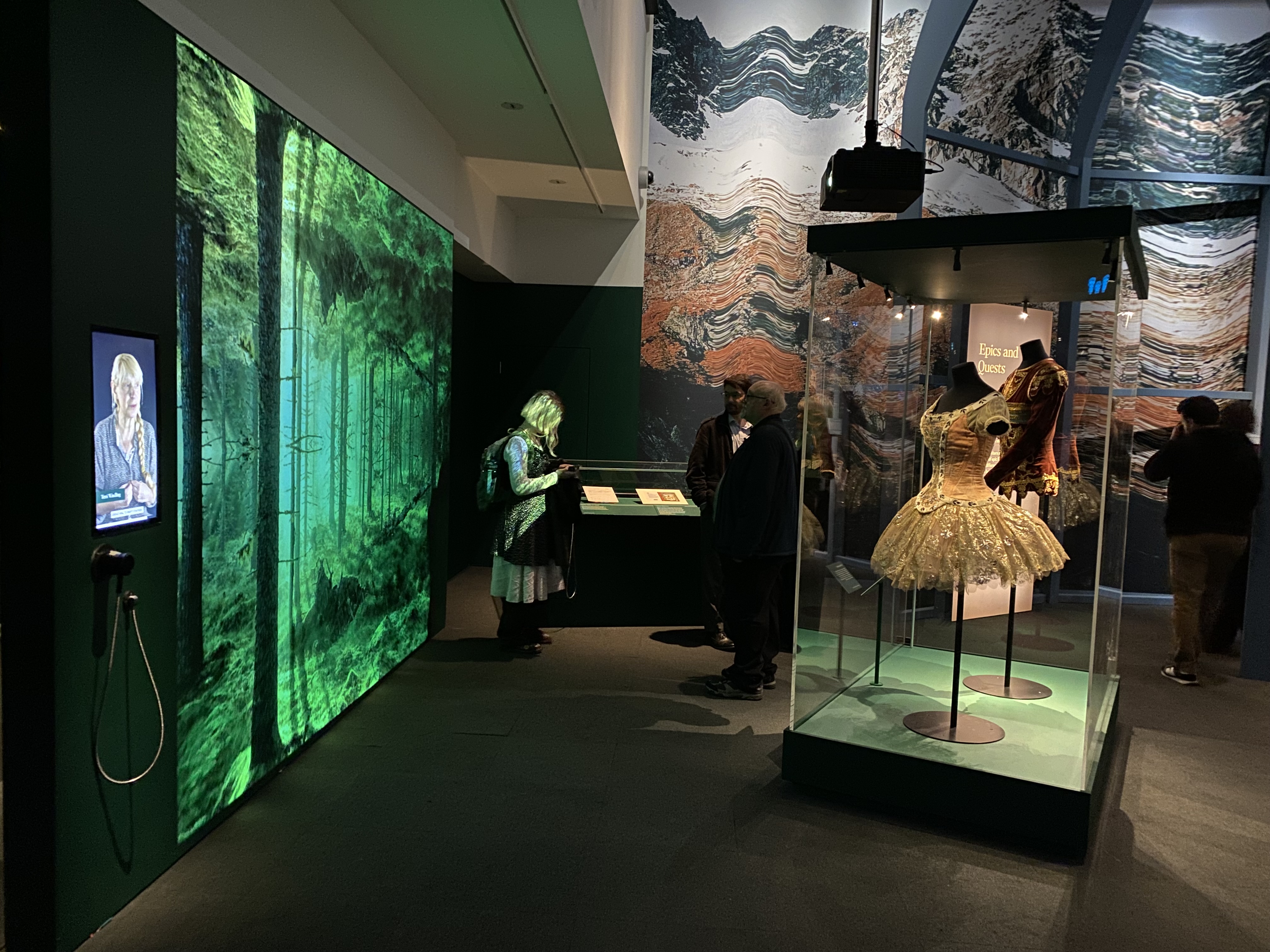
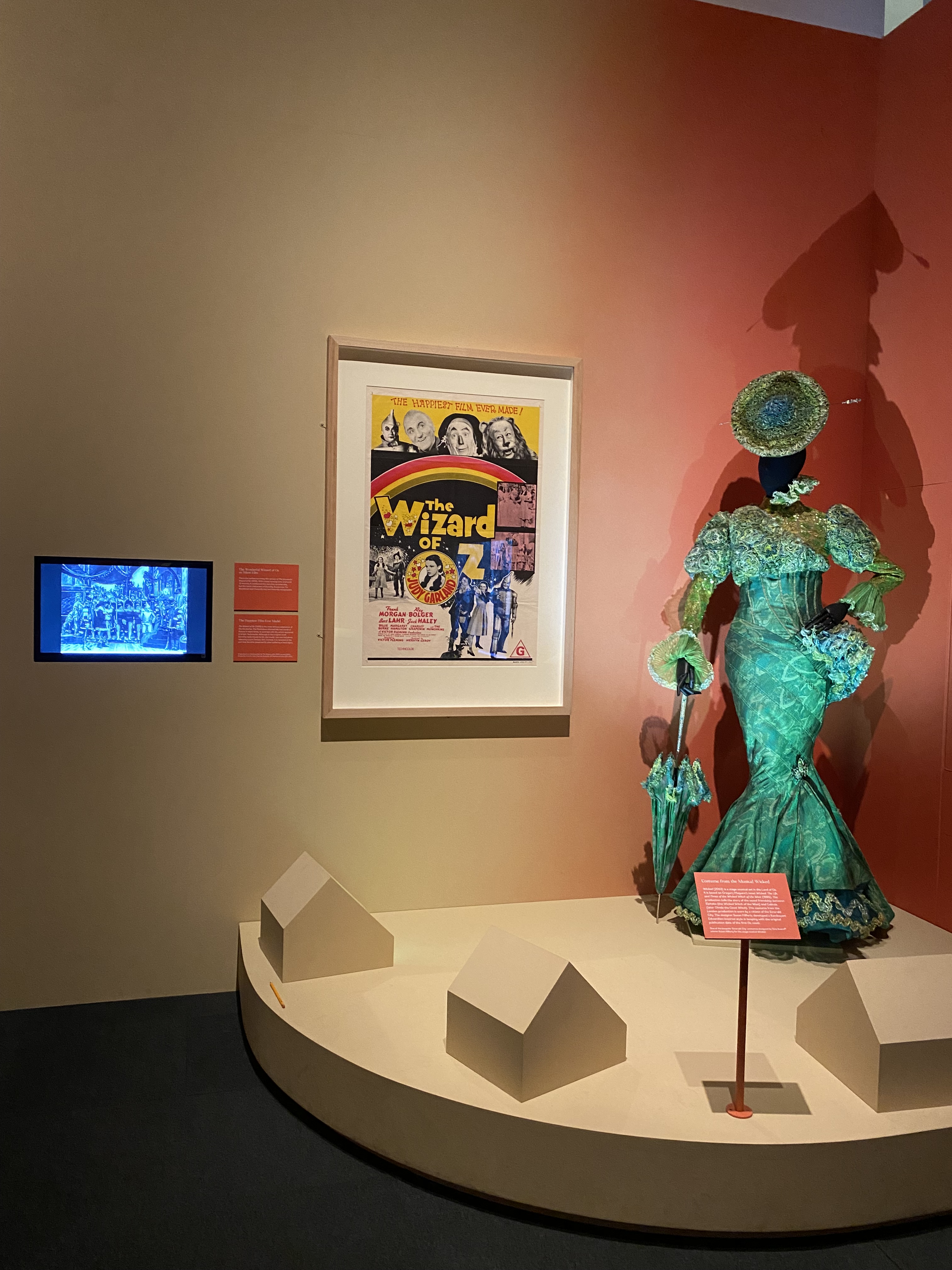
I visited the British Library exhibition with Daisy in February after seeing videos other creators had made about it on TikTok. The space displayed artefacts from a vast range of art forms including illustration, developmental work, props, costume design, comics, books, video games, analogue games, and film. As well as having works spanning eras of historical (The Illiad) and modern (Dungeons and Dragons) cultural significance. From iconic, recognisable artefacts (Gandalf’s Staff) to media I had never heard of such as the graphic novel Monstress that I now have on my shopping list after reading its description in the exhibit. Tanya Kirk was the lead curator of the exhibition, “Fantasy is hugely influential today, but it has roots that are far older than many imagine.”
The audience varied greatly in age; with elderly people admiring the classical work, teenagers interacting with the video game commissions specifically for the exhibition, and even a school trip being conducted while we were there as the children were taught about the Greats of Fantasy literature and the tropes of the genre. Fantasy is such an important, influential, and expansive genre that you can attract a particular audience with the theme alone. It was also a great source of inspiration for writers, artists, and creatives themselves.
What would have been a large flat open area was divided by towering printed artwork and false walls to create a winding path that gave the audience a direction and order to consume the exhibition through. This created a gangway that artefacts were place and displayed along to discover as you walk through, rather than revealing everything immediately. The path is also divided into thematic sections by varying colours and imagery supporting the subcategory titles of Fairy and Folk Tales, Epics and Quests, Weird and Uncanny, and Portals and Worlds. The focus lighting enhances the readability of the artefacts and supporting text, while the lighting of the room is kept fairly dim to add to the mysterious and fantastical atmosphere.
San Diego Comic Convention (Comic-Con International)
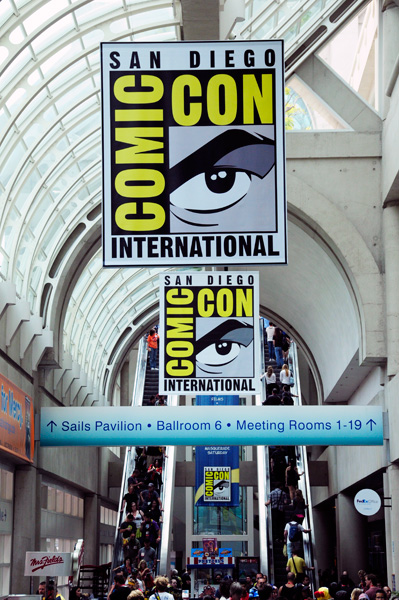
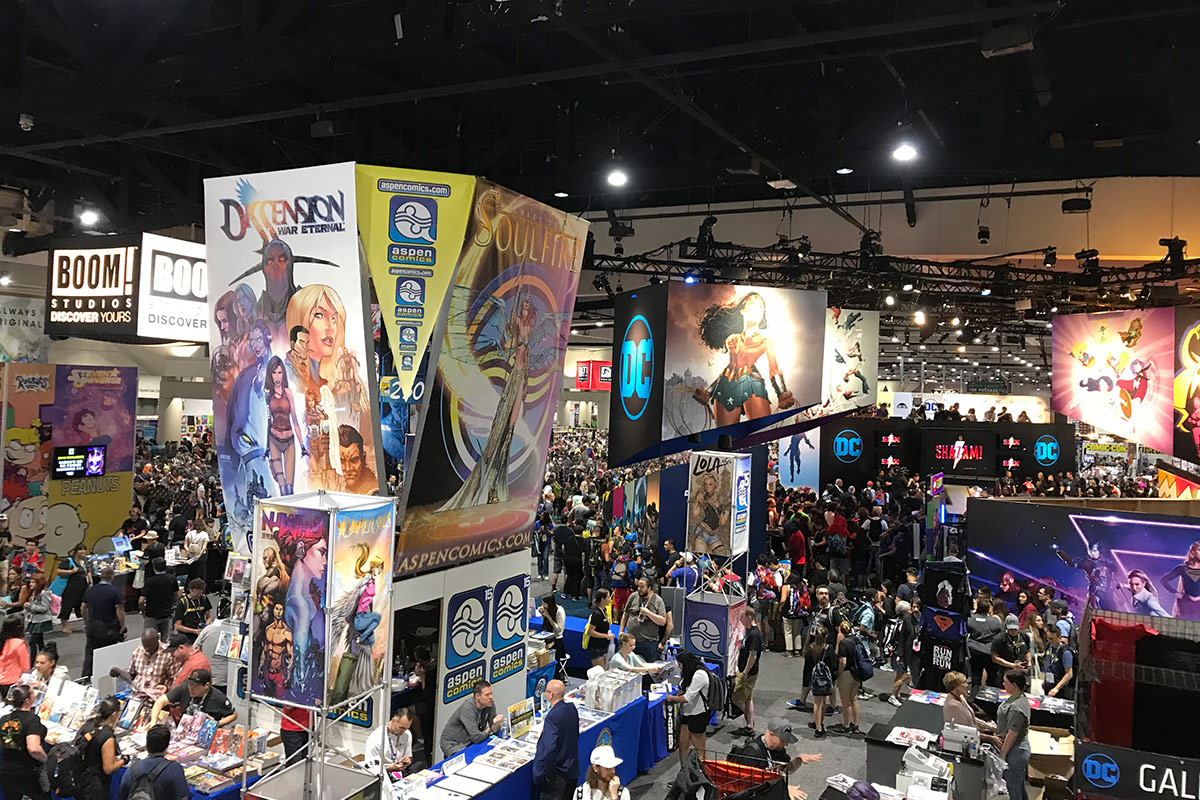
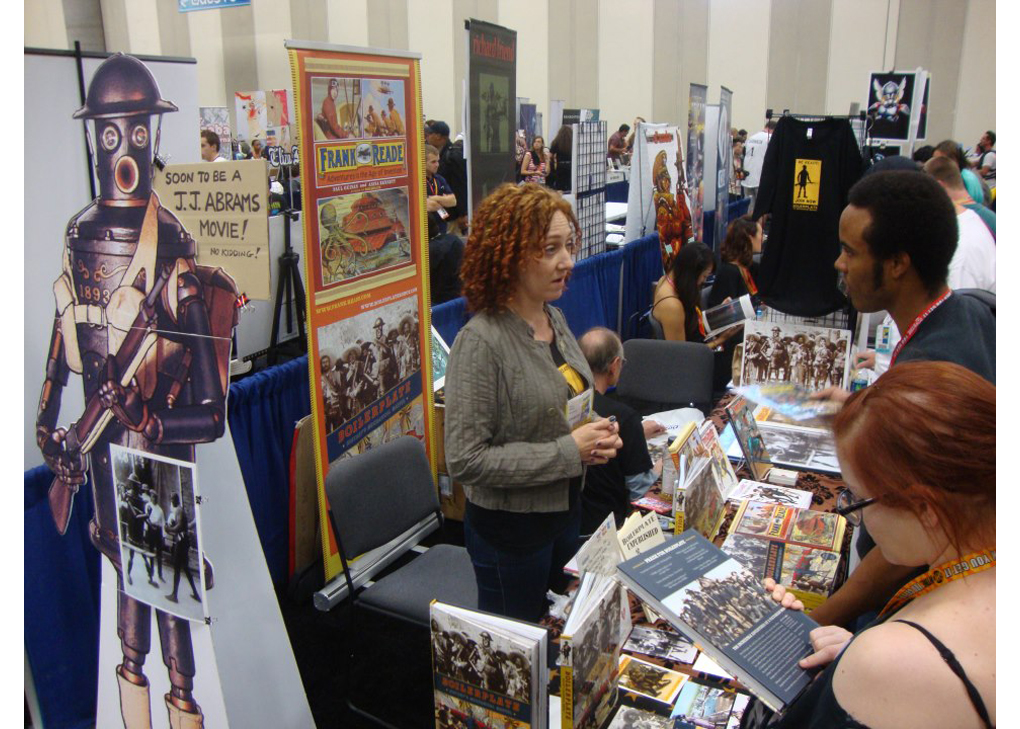
Comics are the primary focus of Comic-Con, hence the name. While related popular art forms are also accepted such as illustration and merchandising. However, if you’re selling fanart it needs to be original and of high quality to compete with the professional vendor booths. Exclusive merchandise is also recommended as a way to drive sales amid the intense competition. The exhibitors range from published professionals working in Marvel comics to indie artists making self-distributed zines.
The original intention of Comic-Con was to put comics into the hands of the public, its audience ranging vastly across ages and demographics. It is a hub for artists, actors, publishers, producers, developers, and especially for fans of popular culture.
Application to the artist alley is an online process, with exhibitors being decided through juried selection. Applicants are curated based on the content of their work and how well it fits with the nature of Comic-Con. This process is extremely competitive given the credibility and popularity of the event. If you are accepted you pay a flat rate table fee, plus any extras you wish, and are free to sell your work with no commission during the event period.
San Diego is the largest comic convention in the world and so is already incredibly renowned, though they do still promote upcoming events through online advertisement and email marketing. It is encouraged that you still do your own marketing (e.g. also through social media and email marketing) in preparation for your attendance to ensure your audience knows when you are going, where to find you, and what you will have available for purchase. The general audience to the con is so vast that the official advertising for the event as a whole may be too broad to reach your particular audience, along will having hundreds of exhibitors that they can’t advertise all of. Though the scale of the convention and its footfall will promote your work as a given.
The artist alley is set up into lanes of tables, each 8’ with table drapes supplied. Many exhibitors use standees, roll-up banners, and display stands to diversify their set-up and increase the usability of the available space.
 sneesbee